Achieving significant operational shifts rarely requires a complete overhaul. Instead, it relies on the continuous execution of micro-improvements.
When scaled systematically, business improvement ideas have the power to completely transform an organization’s efficiency, drive cost reductions, optimize workflows, and foster a culture of excellence.
However, moving from a good idea to a tangible result requires more than just inspiration, but a professional continuous improvement management.
Innovation and process improvement are constant necessities for companies aiming to remain relevant in the US and European markets. Whether these insights come from front-line employees, customer feedback, or open innovation partners, the challenge remains the same: how do you capture them and turn them into action?
Table of Contents
Listen to a summary of this article (in English):
Navigating the complexity of enterprise ideation
Transforming business improvement ideas into concrete results requires a structured approach. Without a defined continuous improvement process, organizations often face a visibility gap, otherwise known as operational blind spots, where real opportunities for growth go unnoticed due to fragmented data and siloed communication.
These opportunities are often hidden behind a lack of process clarity or the difficulty of measuring current performance. To overcome this, organizations must create environments where employees are encouraged to step back from their daily routines and look at the company with a fresh, critical eye.
Strategic best practices for Idea Generation
To maintain a steady flow of high-quality ideas and practice continuous improvement, consider these core strategies:
- Aligned communication: even when a great opportunity is spotted, it often dies because it isn’t communicated effectively. Employees need a clear way to present their ideas so that leadership can evaluate them based on strategic value and feasibility.
- Feasibility and ROI Focus: a great idea on paper must be viable in terms of cost, time, and resource allocation. Conducting a rigorous financial impact analysis is essential for identifying hard savings versus mere incremental gains.
- Performance Monitoring: after an idea is implemented, the work isn’t over. Managers must monitor and evaluate the results to ensure these improvements are sustainable and continue to provide long-term benefits to the business.
The business ecosystem rewards companies that demonstrate experience and expertise. This applies internally as well: the most valuable insights come from those with first-hand experience in the processes they are trying to improve.
The power of transparent communication
Communicating ideas is the most critical bridge in the innovation process. Too often, brilliant suggestions are lost in crowded email threads or forgotten after a meeting.
By establishing a transparent communication channel, ideas can be properly vetted, and the professionals behind them can gain the visibility they deserve.
An open communication culture provides several key benefits:
- Higher efficiency: streamlining workflows directly impacts productivity.
- Employee engagement: when team members feel heard, retention rates improve, and the organizational climate becomes more positive.
- Market differentiation: unique internal improvements often lead to superior customer experiences, setting the brand apart from competitors.
7 ways to generate improvement ideas for your company
To generate a consistent stream of opportunities for improvements, you need a clear, actionable process. Here are seven steps to get started:
1. Identify daily friction points
The best starting point is to look at pain points such as bottlenecks in the production line, gaps in team communication, or recurring customer service complaints. Within an Industry 4.0 context, this involves analyzing data from the shop floor to find hidden inefficiencies in automated workflows.
2. Evaluate potential solutions
Once a problem is identified, analyze how it can be solved. Don’t be afraid to think outside the box or consider disruptive technologies. At this stage, involving colleagues from different departments ensures cross-functional synergy, leading to more robust solutions.
3. Pitch the opportunity
Present your findings to your peers and leadership. Support your pitch with data or evidence, ensuring you explain exactly which strategic challenge the idea solves.
4. Utilize an Idea Management Software
A structured program is essential for organizing and objective evaluation. AEVO Innovate offers a comprehensive Idea Program module designed to maximize ideation. By leveraging AI-driven triaging and custom approval flows, AEVO Innovate helps turn raw suggestions into effective actions while monitoring implementation progress.
5. Seek leadership feedback
Active feedback from leadership validates an employee’s effort and ensures the idea aligns with the broader corporate strategy. This builds trust and encourages a long-term commitment to innovation and continuous improvement.
6. Invest in continuous training
Efficiency is driven by knowledge. Encourage your team to seek training in modern methodologies and stay updated on tech trends. Exposing teams to global innovation benchmarks helps them spot opportunities that local competitors might miss.
7. Apply proven frameworks
Several methodologies can provide a structured home for your improvement ideas:
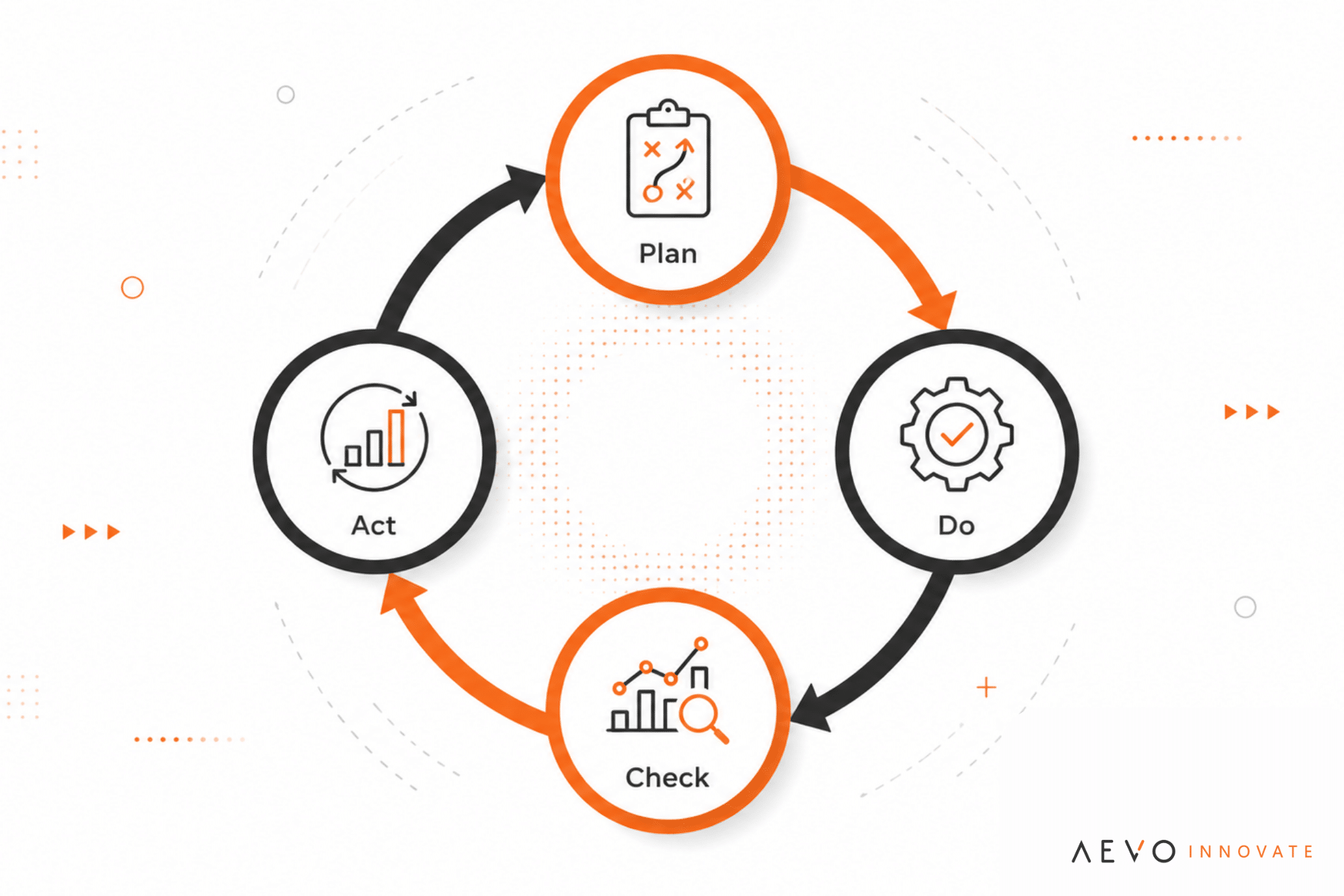
- PDCA (Plan-Do-Check-Act): a cycle for systematic, continuous process evolution.
- Kaizen: a management practice focused on achieving operational excellence and customer satisfaction through incremental changes.
- Six Sigma: a data-driven approach aimed at eliminating defects and maximizing value through the DMAIC framework (Define, Measure, Analyze, Improve, Control).
Conclusion
Generating business improvement ideas is the bedrock of remaining competitive. Identifying, communicating, and implementing these changes is a process that is significantly easier with the right infrastructure.
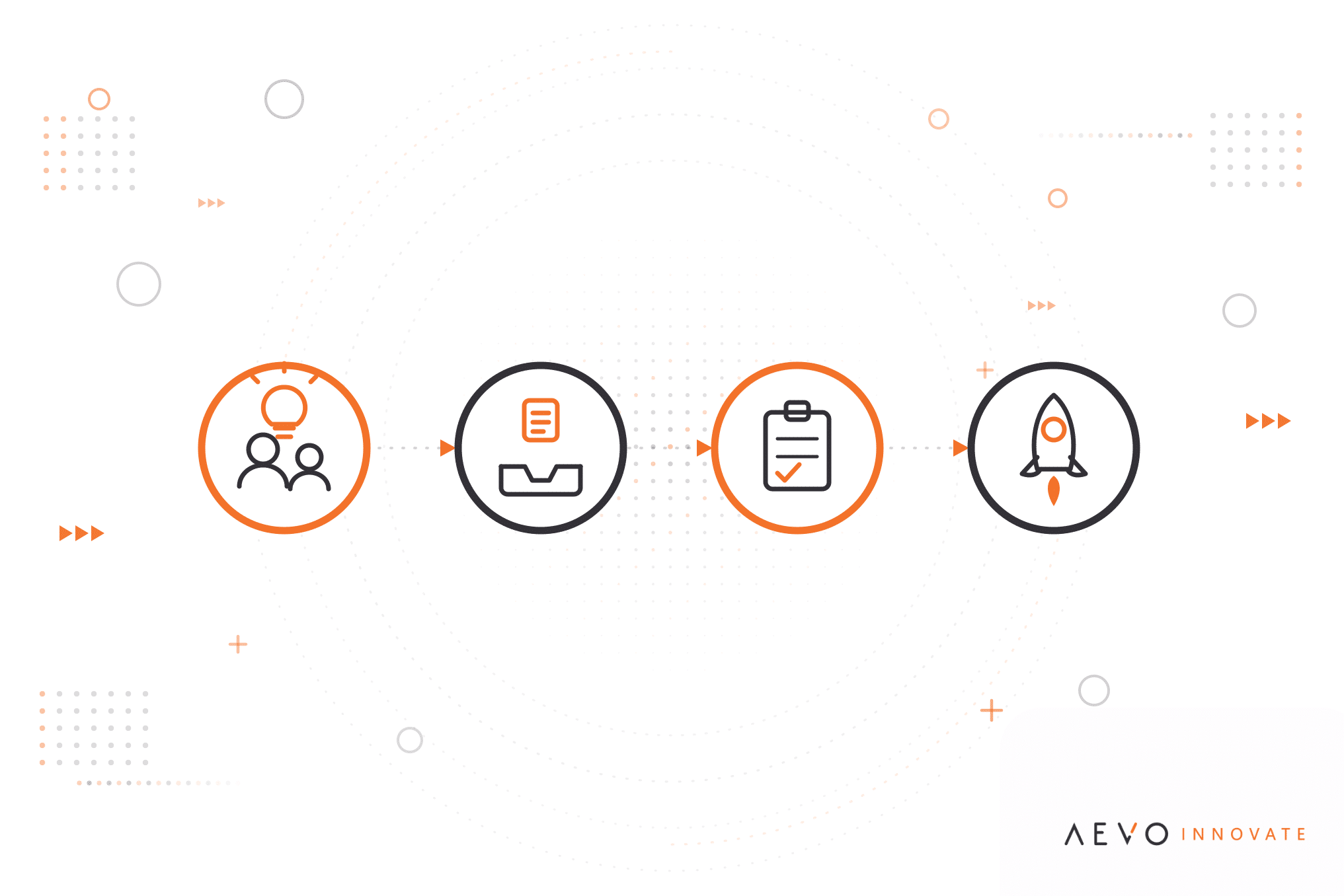
A well-structured Idea Program, like the one offered by AEVO Innovate, allows you to manage the entire lifecycle of an idea, from the first spark of inspiration to the final calculation of ROI. By fostering this environment of collaboration, you ensure your company’s success for years to come. Want’s to know more about AEVO Innovate idea management software? Book a free demo with our team here.
Need a refresh? Here is a video for you:
Frequently Asked Questions (FAQ)
How do we measure the financial impact of an improvement idea?
The best way is to establish clear KPIs before implementation. Track metrics such as hours saved, reduction in material waste, or increase in customer satisfaction scores. AEVO’s Innovate platform automates this by monitoring the ROI and Hard Savings of implemented suggestions in real-time.
How can we encourage more employees to participate in an Idea Program?
Engagement is driven by recognition and transparency. Ensure every idea receives feedback, and consider rewarding the most impactful suggestions with professional development opportunities, bonuses, or internal awards.
Why is a structured idea management platform better than a simple suggestion box?
Physical or email-based suggestion boxes often lead to idea silos where information is lost. A digital platform like AEVO Innovate provides a transparent, searchable database where ideas can be collaboratively refined, voted on, and tracked through every stage of approval, providing a “Single Source of Truth” for corporates.