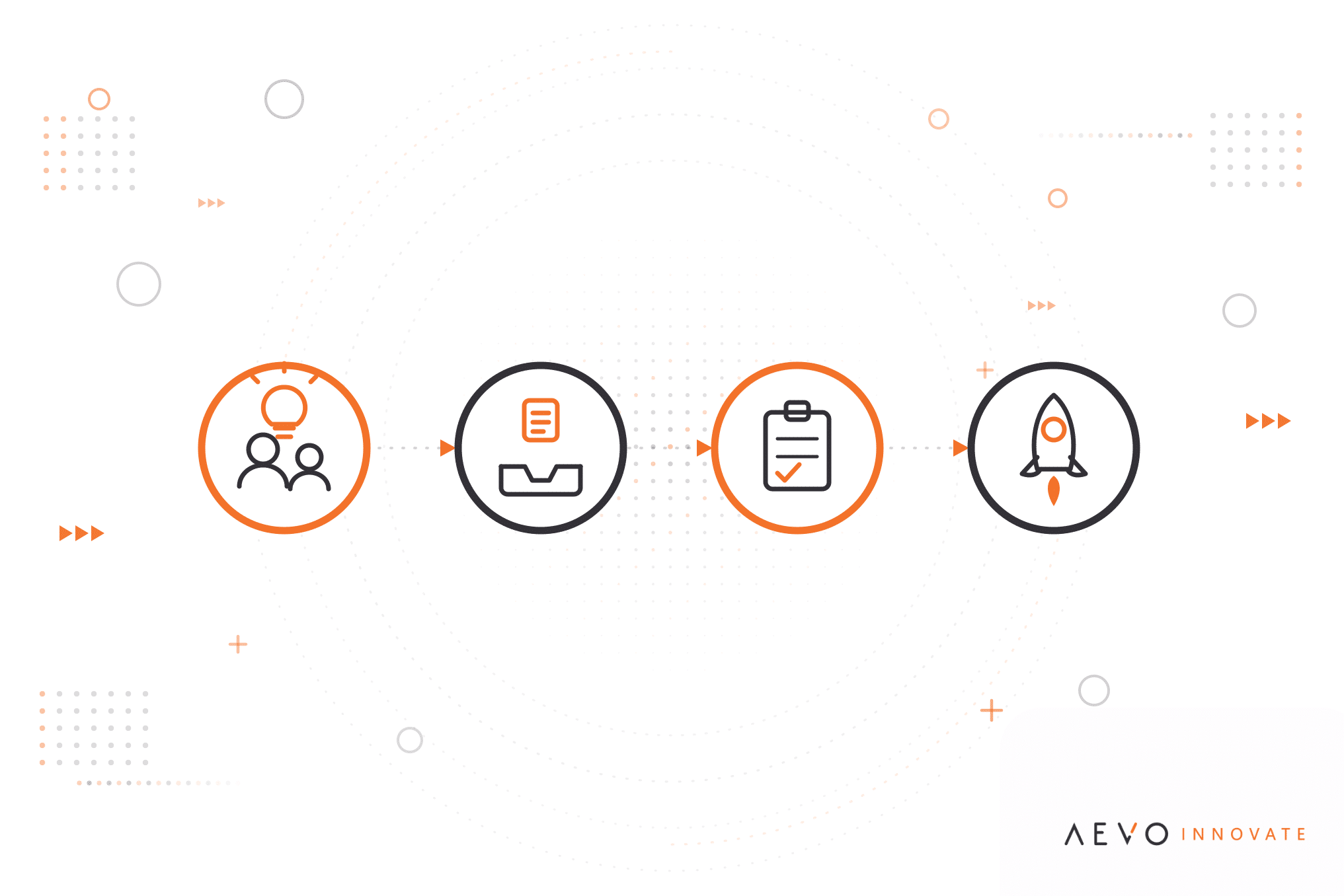
Organizations can no longer treat the optimization of products, services and workflows as a secondary initiative. This becomes an immediate mandate to prevent operational obsolescence. The pressure intensifies daily as disruptive market entrants realign buyer expectations and challenge established enterprise leadership across North America and Europe.
The continuous improvement cycle, widely known as the PDCA cycle or Deming methodology, provides a highly structured approach to meeting this challenge. It focuses on systematic process optimization, helping organizations resolve inefficiencies cleanly while uncovering fresh pathways for sustainable growth.
Originally built for heavy manufacturing, the PDCA cycle has proven its efficacy across diverse modern sectors. The methodology has adapted beautifully to the digital era, where business process automation and data-driven optimization serve as foundations for operational excellence.
Let’s explore the phases that sustain this cycle, best implementation practices, real-world corporate examples, and the core frameworks driving modern business efficiency.
Table of Contents
Listen to a summary of this article (in English):
What is the Continuous Improvement Cycle?
The continuous improvement cycle, or PDCA cycle, is an iterative management framework designed to guide structured optimization within organizations.
Developed initially by Walter Shewhart in the 1930s, it was later popularized by quality management pioneer W. Edwards Deming.
The “Deming methodology” was famously applied during post-WWII reconstruction in Japan, laying the groundwork for the operational and manufacturing efficiencies that fueled the nation’s historic industrial ascent.
Today, this loop serves as an essential tool across a wide array of global industries, including technology, healthcare, financial services, and retail. Its application is highly scalable, offering significant value to nimble mid-market enterprises as well as Fortune 500 corporations aiming to slash waste and elevate customer satisfaction.
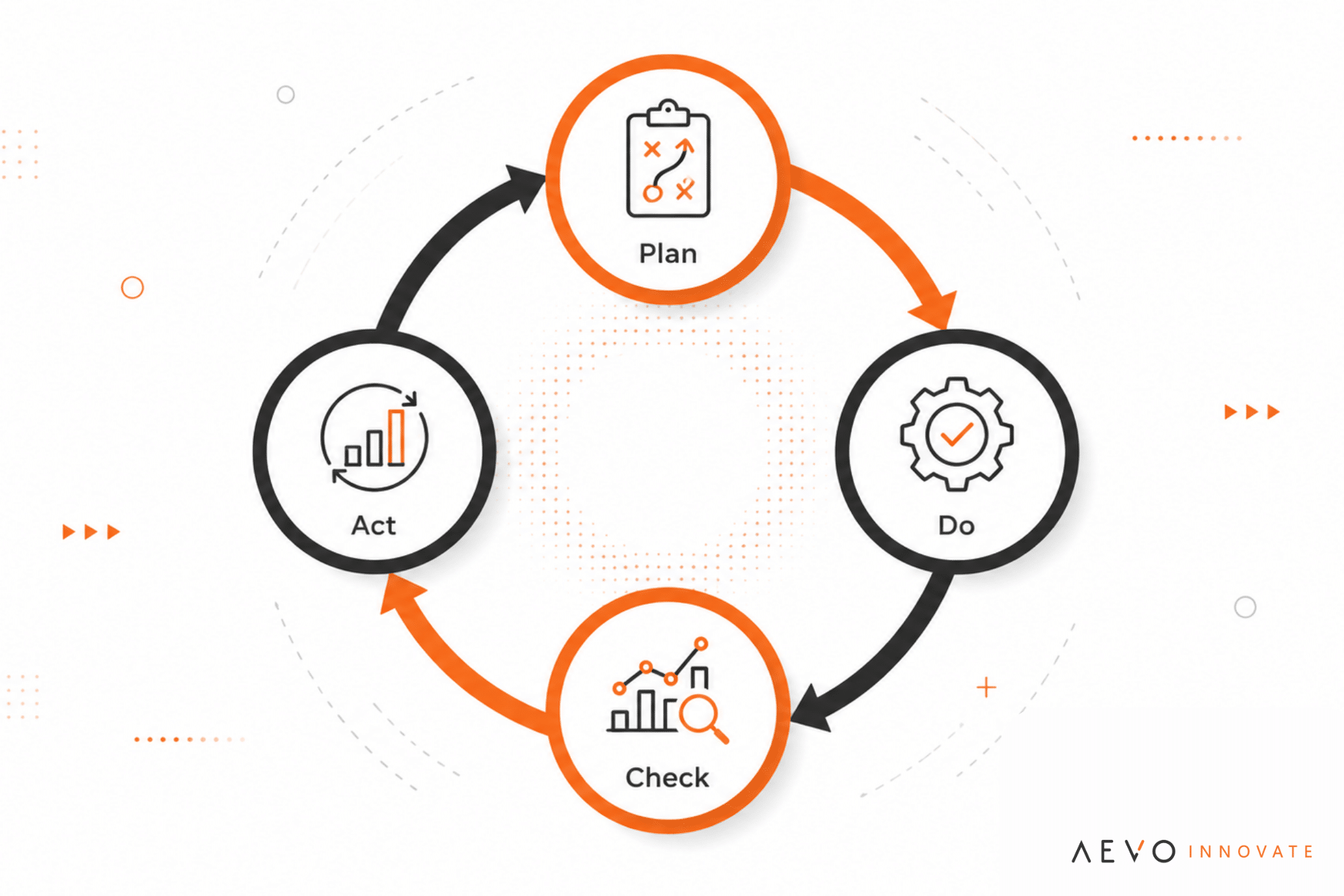
The cycle is structured around four recurring phases designed to deliver cumulative, sustainable progress:
- Plan: identify an operational bottleneck or growth opportunity, analyze the current context, and build a targeted action plan.
- Do: implement the proposed changes or solutions, ideally starting with a small-scale pilot to minimize corporate risk.
- Check: measure and analyze the post-implementation data against your original benchmarks to evaluate success.
- Act: standardize successful modifications across the organization, address remaining gaps, and reset the loop for the next iteration.
The Importance of Continuous Improvement for Corporate Competitiveness
Adopting a continuous improvement framework allows companies to pivot quickly when market dynamics or consumer expectations shift. By running structured optimization loops, organizations can identify operational leaks and design flaws early, resulting in leaner, more predictable workflows.
This proactive posture directly lowers overhead costs while sharpening product and service quality, which ultimately drives customer retention and long-term brand equity.
Furthermore, a commitment to iterative progress builds a strong continuous improvement culture. When employees are actively encouraged to challenge legacy workflows and pitch localized improvements, engagement spikes across teams. It creates a collaborative workplace environment where everyone feels invested in organizational success.
In today’s digital landscape, integrating this methodology with advanced tools like AI engines, predictive big data, and intelligent automation makes continuous improvement even more powerful.
These technologies accelerate data digestion, allowing leaders to spot operational anomalies and deploy corrective measures with unprecedented speed.
The 4 Stages of the Continuous Improvement Cycle
Systematic execution of the PDCA cycle is essential for securing long-term operational excellence. Here is how leading global enterprises execute each phase to maximize impact:
1. Plan
A successful optimization initiative depends entirely on a rigorous planning stage. Teams must pinpoint specific issues using data-driven diagnostics rather than intuition, analyzing the current state to reveal underlying root causes.
Setting hyper-specific, measurable KPIs aligns team efforts and mitigates deployment risks. Analytic tools like SWOT matrices, Pareto charts, and fishbone diagrams are highly effective here. Securing early buy-in from cross-functional stakeholders ensures a comprehensive view of the problem and shared accountability.
2. Do
During the execution phase, teams put the planned strategy into motion. Best practices dictate launching these changes within a controlled environment or limited test market before a company-wide rollout.
Collecting granular data during this pilot phase is critical for tracking real-time performance. Documenting every procedural modification ensures complete operational transparency, makes success repeatable, and enables rapid adjustments if the pilot faces unexpected hurdles.
3. Check
The verification phase requires a cold, data-backed assessment of whether the executed changes achieved the predefined goals. Analyzing these data sets highlights exactly what worked, what failed, and why.
Comparing actual results against early baselines using statistical tools prevents confirmation bias and reveals hidden operational friction points. This phase provides the critical evidence needed to decide whether a strategy is ready for full-scale adoption.
4. Act
The final phase focuses on scaling and standardizing successful outcomes to turn short-term wins into permanent corporate assets. Broad deployment ensures that the operational improvements deliver meaningful financial and strategic value across the enterprise. Key actions in this phase includes:
- Developing clear Standard Operating Procedures (SOPs) to formalize new workflows;
- Conducting structured team training sessions to guarantee consistent execution;
- Setting up continuous tracking loops to safeguard performance gains and flag the next optimization opportunity, restarting the cycle.
Key Benefits of the Continuous Improvement Cycle
A structured continuous improvement program yields multi-layered benefits that directly impact an organization’s bottom line and strategic agility.
Enhanced Quality
Iterative refinement directly elevates product and service standards. By systematically eliminating friction points, companies consistently meet and exceed client expectations, solidifying their market positioning and protecting brand reputation in highly competitive landscapes.
Direct Cost Reduction
Slashing operational waste is central to the continuous improvement cycle. By optimizing resource allocation and identifying workflow redundancies, businesses run significantly leaner operations, freeing up capital that can be reinvested into strategic expansion.
Boosted Productivity
Maximizing process efficiency allows teams to output greater value using the same baseline resources. The continuous improvement cycle targets and clears operational bottlenecks, which shortens cycle times and improves employee morale by removing frustrating, non-value-add tasks from daily routines.
Core Continuous Improvement Methodologies
Several mature frameworks can be integrated alongside the PDCA cycle to supercharge an organization’s operational efficiency:
1. Lean Methodology
Rooted in the famous Toyota Production System, Lean focuses intensely on maximizing customer value while eliminating waste. It systematically targets inefficiencies like excess inventory, redundant movement, and defects.
Implementing Lean requires deep process mapping to ensure every corporate action directly benefits the end consumer.
2. Six Sigma
Six Sigma is a highly disciplined, data-driven methodology aimed at reducing process variance and eliminating defects.
Developed by Motorola and famously scaled by General Electric, it relies on strict statistical analysis to ensure processes yield fewer than 3.4 defects per million opportunities, ensuring near-perfect operational consistency.
3. Kaizen
Kaizen is a Japanese philosophy translating to “change for the better.” It highlights the compounded power of small, daily improvements driven by everyone in the organization, from front-line employees to C-suite executives.
This approach democratizes the continuous improvement mentality, building an environment of collective responsibility where micro-changes accumulate into massive organizational shifts.
Real-World Applications of Continuous Improvement
Modern industries leverage continuous improvement loops to conquer distinct corporate challenges:
The Automotive Sector
Global automotive titans like Toyota and Ford utilize PDCA loops to maintain manufacturing supremacy. They apply the cycle to minimize assembly-line downtime, optimize supply chain logistics, and continuously inspect component quality, ensuring optimal factory throughput.
The Healthcare Industry
Hospitals and modern clinical networks use continuous improvement to elevate patient safety and care delivery. Institutions regularly deploy the continuous improvement cycle to compress patient wait times in emergency rooms, increase diagnostic accuracy, and optimize medical asset utilization, reducing institutional costs while saving lives.
Information Technology & Software
In the tech sector, continuous improvement is baked directly into agile development methodologies. Software engineering teams use iterative loops to optimize codebase health, minimize bugs, and accelerate feature deployments, ensuring applications evolve fluidly in line with user feedback.
Conclusion
Embracing a systematic, iterative approach to operations allows organizations to consistently elevate quality, reduce overhead, and capture market share. The continuous improvement cycle remains one of the most versatile and field-tested strategies for achieving sustained operational excellence across any industry.
To extract the highest ROI from these cycles, deploying the right digital infrastructure and corporate support is vital.
AEVO Innovate provides an end-to-end innovation management platform, designed specifically to streamline process modeling, tracking, and continuous improvement. By centralizing idea generation and execution, AEVO Innovate empowers leadership teams to scale their optimization workflows seamlessly, making the organization fundamentally more agile and resilient.
Here’s a video for you with the 4 pillars of the Continuous Improvement Cycle explained (in english):
Frequently Asked Questions (FAQ)
How does the Continuous Improvement cycle differ from methodologies like Lean or Six Sigma?
The continuous improvement cycle is a foundational, iterative four-step framework for managing change and improvement. Lean and Six Sigma are specialized methodologies that often utilize the PDCA loop as their underlying engine. Lean focuses heavily on eliminating waste, while Six Sigma uses statistical data to minimize process variation.
Can any businesses benefit from continuous improvement?
Absolutely. While popularized by industrial giants, the continuous improvement cycle is highly scalable. Businesses from different type of markets can leverage it to optimize resource allocation, eliminate daily operational bottlenecks, and enhance customer satisfaction with minimal capital investment.
What is the most critical phase of the continuous improvement cycle?
Every phase is vital to the loop, but the Plan phase is foundational. Without accurate root-cause data, a well-defined problem statement, and clear KPIs, the subsequent execution, checking, and acting phases lack the direction required to produce sustainable results.