The ISO 9001 Quality Management Standard defines opportunities for improvement as favorable possibilities for organizations such as adopting new practices, launching products, exploring new markets, approaching new customers, building partnerships, or adhering to new technologies.
One of the core principles of quality management in any organization is continuous improvement.
When you consider the impact that constant process optimization can deliver, the challenge becomes clear: how can you strengthen this culture of innovation to consistently improve processes, products, and services?
In this article:
- What is continuous improvement?
- What are opportunities for improvement?
- Why it’s important to identify improvement opportunities
- Tools to identify and implement improvements
- Examples of continuous improvement in organizations
- Conclusion
Here is a summary audio of today’s reading:
What Is Continuous Improvement?
Continuous improvement is a management practice focused on systematically and consistently enhancing products, services, and processes.
Using the continuous improvement cycle, companies conduct regular evaluations of operations, detect inefficiencies, and propose structured solutions.
Opportunities for improvement are closely tied to incremental innovation. When properly executed, these strategies maximize efficiency and business outcomes.
In today’s highly competitive environment, ongoing improvements are not simply technical adjustments. They are strategic practices that strengthen customer satisfaction, ensure long-term adaptability, and build resilience against market shifts.
What Are Opportunities for Continuous Improvement?
According to ISO 9001, opportunities for improvement are favorable chances for growth and optimization, such as:
- Introducing new practices
- Launching products or services
- Entering new markets
- Reaching new customer segments
- Building strategic partnerships
- Leveraging emerging technologies
These opportunities can be identified through:
- Internal and external context mapping
- Stakeholder requirements
- Performance indicators
- Internal and external audits
- Management review meetings
It’s important to separate nonconformities from opportunities for improvement. Nonconformities highlight issues or errors, while opportunities represent proactive, strategic possibilities for innovation and growth.
Why Continuous Improvement Matters
The systematic identification of opportunities for improvement ensures that companies remain competitive, customer-centric, and adaptable. The benefits of continuous improvement include:
- Higher productivity: Process optimization increases speed and reduces resource use.
- Improved quality: Delivering consistent, high-quality products and services enhances loyalty and satisfaction.
- Innovation mindset: Challenges are reframed as opportunities to learn and innovate.
- Sustainable growth: Businesses adapt to evolving markets and consumer behaviors.
- Cost reduction: Ongoing efficiency improvements reduce waste and strengthen financial performance.
Tools for Identifying Opportunities for Continuous Improvement
Many tools can help organizations identify areas for continuous improvement. Below we highlight eight proven resources that support building an innovation culture and turning opportunities for improvement into measurable business results:
1. PDCA Cycle
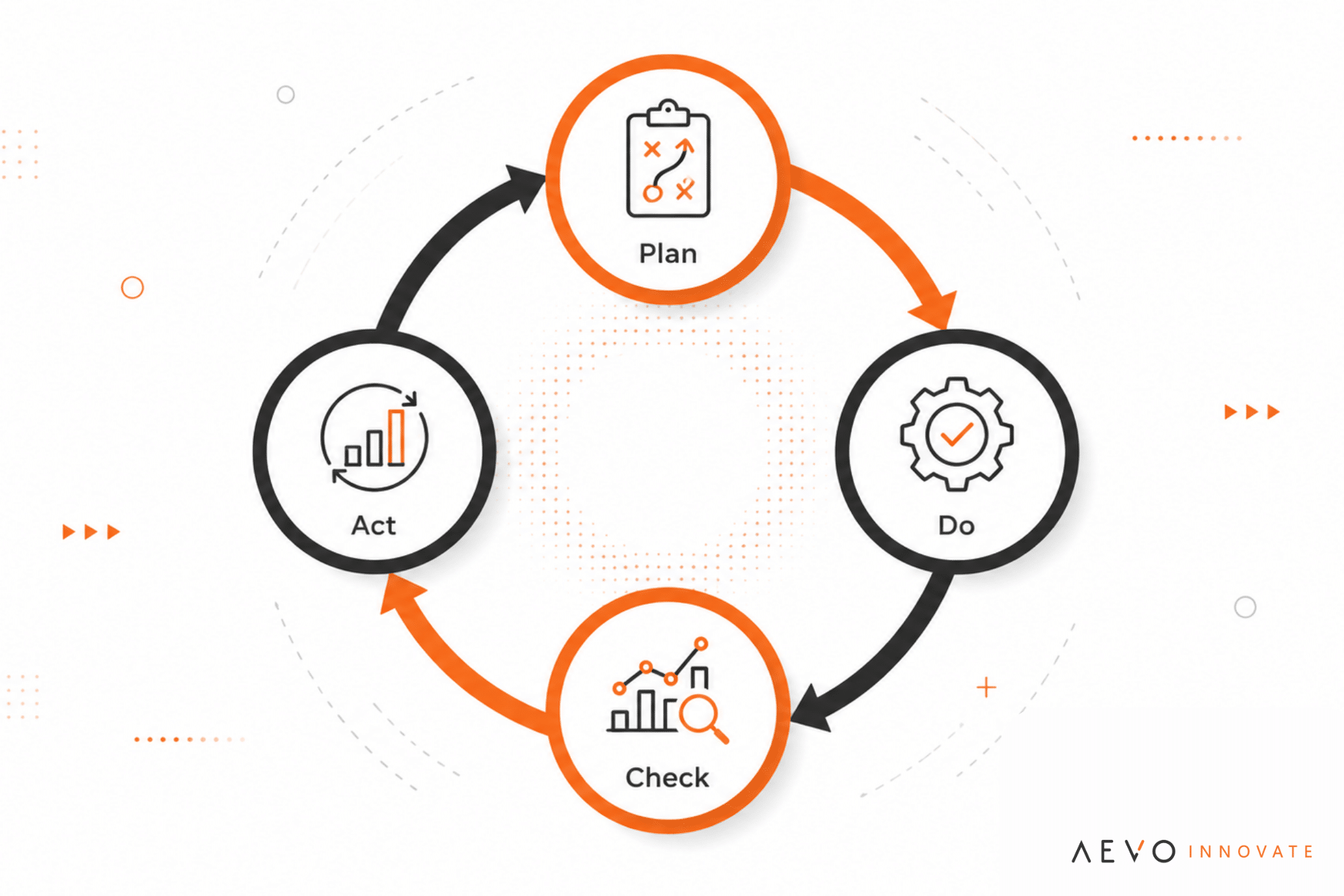
The PDCA Cycle (Plan, Do, Check, Act), also known as the Shewhart or Deming Cycle, was developed in the 1920s and remains one of the simplest and most effective continuous improvement methodologies.
Its four pillars are:
- Plan: Identify problems or areas of improvement and design solutions.
- Do: Implement the plan on a small scale.
- Check: Measure the results and evaluate effectiveness.
- Act: Scale the change across the organization if successful.
Originally applied to quality maintenance in manufacturing, PDCA is now widely used to understand processes, solve problems, and sustain operational efficiency across industries.
2. SWOT Analysis
The SWOT matrix (Strengths, Weaknesses, Opportunities, Threats) is one of the most well-known strategic analysis tools. It helps organizations understand their position in the market and identify areas for process optimization.
By examining the strengths and weaknesses of products, services, or operations, companies can highlight what needs improvement and recognize external threats that may hinder growth.
3. Brainstorming
Brainstorming is a creative thinking technique designed to generate new ideas and solutions for identified challenges.
Beyond producing fresh ideas, brainstorming sessions improve team engagement and foster collaboration. By creating an environment where employees feel safe to share insights, organizations uncover practical improvements and innovative solutions.
4. Innovation Programs
Another powerful way to uncover opportunities for continuous improvement and innovation is through structured innovation programs.
- Internal Innovation Programs (Idea Management Program & Intrapreneurship): These programs encourage employees not only to think outside the box but also to develop creative, actionable solutions to organizational challenges. Idea platforms and intrapreneurship initiatives allow employees to take ownership of improvements.
- Open Innovation Programs: In this model, collaboration is the driver. The company partners with external organizations, startups, universities, or research institutions to co-create solutions. This accelerates the innovation process by bringing in external expertise, reducing risks, and speeding up time-to-market.

5. Audits and Process Reviews
Regular audits and process reviews are another valuable way to identify opportunities for improvement.
By conducting periodic evaluations, organizations can uncover bottlenecks and inefficiencies. But beyond pointing out nonconformities, the real value lies in implementing adjustments that increase process efficiency and drive quality enhancement.
6. Industry Benchmarking
Benchmarking compares your company’s practices, methods, and results with competitors or industry leaders.
This comparison highlights organizational weaknesses and reveals best practices that can be adopted. When combined with tools like PDCA or SWOT, benchmarking becomes even more powerful in identifying improvement opportunities.
7. Customer Feedback
Customers are often the richest source of insights for process optimization. Collecting feedback regularly provides clear signals about areas that require improvement.
Organizations that systematically listen to customers can implement targeted improvements that enhance satisfaction, loyalty, and brand reputation.
8. Quality Control Circles (QCC)
The Quality Control Circle (QCC) method, created in Japan in 1962 by Kaoru Ishikawa, involves small groups of 5 to 10 employees who meet regularly to discuss and solve problems within their work areas.
By leveraging the expertise of employees who know the processes best, QCCs foster engagement and practical, bottom-up improvements.
This tool is considered one of the most effective for innovation and continuous improvement because once one issue is resolved, new challenges and inefficiencies naturally emerge, keeping the cycle of improvement ongoing.
Over time, the benefits extend across the entire organization, building a strong culture of operational efficiency and employee empowerment.
Examples of Continuous Improvement in Organizations
Toyota – A pioneer in continuous improvement, Toyota’s Toyota Way emphasizes anticipating overload, eliminating waste, and reducing inefficiencies.
Intel – Applies rigorous quality control methods and waste reduction to sustain innovation and enhance customer satisfaction.
Kimberly-Clark – Improved logistics processes and invested in employee development, resulting in reduced absenteeism and higher efficiency.
Nike – Through initiatives like the Sustainable Apparel Coalition, Nike partners with the U.S. Environmental Protection Agency and others to save costs and promote sustainable innovation.
Read more: Transformation in Industry: Turn Intent Into Impact
Need a refresh? Here is a video for you:
Conclusion
Opportunities for improvement exist everywhere within organizations. The challenge is developing a sharp eye (combined with the right tools and methodologies) to optimize this process and unlock the full range of benefits that come with being an innovative company.
For companies looking to implement structured and scalable improvement initiatives, AEVO Innovate offers proven methodologies and innovation solutions, validated by over 200 major organizations in Brazil and worldwide.
Get in touch with our specialists today and see how we can transform your continuous improvement efforts into measurable business growth.