Total Productive Maintenance (TPM) remains one of the most effective methodologies to maximize equipment effectiveness and improve shop-floor reliability. Originally developed in Japan, TPM spreads across eight pillars, from autonomous maintenance to focused improvement, and has become a benchmark for manufacturing efficiency worldwide.
However, research shows that up to 70% of TPM programs fail to achieve their expected impact because of low employee engagement and lack of structured processes to capture improvement ideas (McKinsey, 2021). While the technical side of TPM is well-defined, the human and cultural side is often left behind. The success of TPM doesn’t just lie in the tools and processes; it lies in engaging the people who interact with these systems on a daily basis.
This is where idea management software comes in, giving organizations the structure, transparency, and scalability to connect Total Productive Maintenance with a broader culture of continuous improvement. With the right tools in place, TPM can evolve from a reactive maintenance strategy to a proactive innovation system, seamlessly integrated into the company’s overarching business goals.
In this article:
- The Engagement Challenge in Total Productive Maintenance
- How Idea Management Strengthens TPM
- Balanced Scorecard for TPM and Continuous Improvement
- From TPM to a Culture of Innovation
- Conclusion
Listen to this blogpost’s summary:
The Engagement Challenge in TPM
Total Productive Maintenance asks every employee, from operators to leadership, to take ownership of equipment and processes. Yet in many plants, operators’ suggestions remain untracked, unanswered, or unrewarded, leading to declining participation over time.
A global survey by PwC revealed that only 53% of manufacturers consider their continuous improvement programs effective, mainly because of insufficient feedback and visibility for employees (PwC, 2022). In other words, the system to capture and act on ideas often lags behind the methodology.
Additionally, without an effective system to engage and motivate employees, even the most robust TPM programs can lose steam. While most manufacturers invest heavily in equipment and technology, the human element remains the most significant determinant of Total Productive Maintenance’s success. Without actively fostering a culture where employee ideas are valued and acted upon, TPM risks becoming just another set of technical processes that don’t yield the expected results.
According to PwC’s 2025 survey of 610 operations leaders, 92% said their tech investments failed to deliver expected results, not because of flawed business cases, but due to integration complexity (47%) and data issues (44%). This reflects a broader reality: when execution and engagement are neglected, even the best strategies fall short. TPM faces the same challenge; success depends less on “what” tools you adopt and more on “how” people use them consistently on the shop floor.
How Idea Management Strengthens TPM
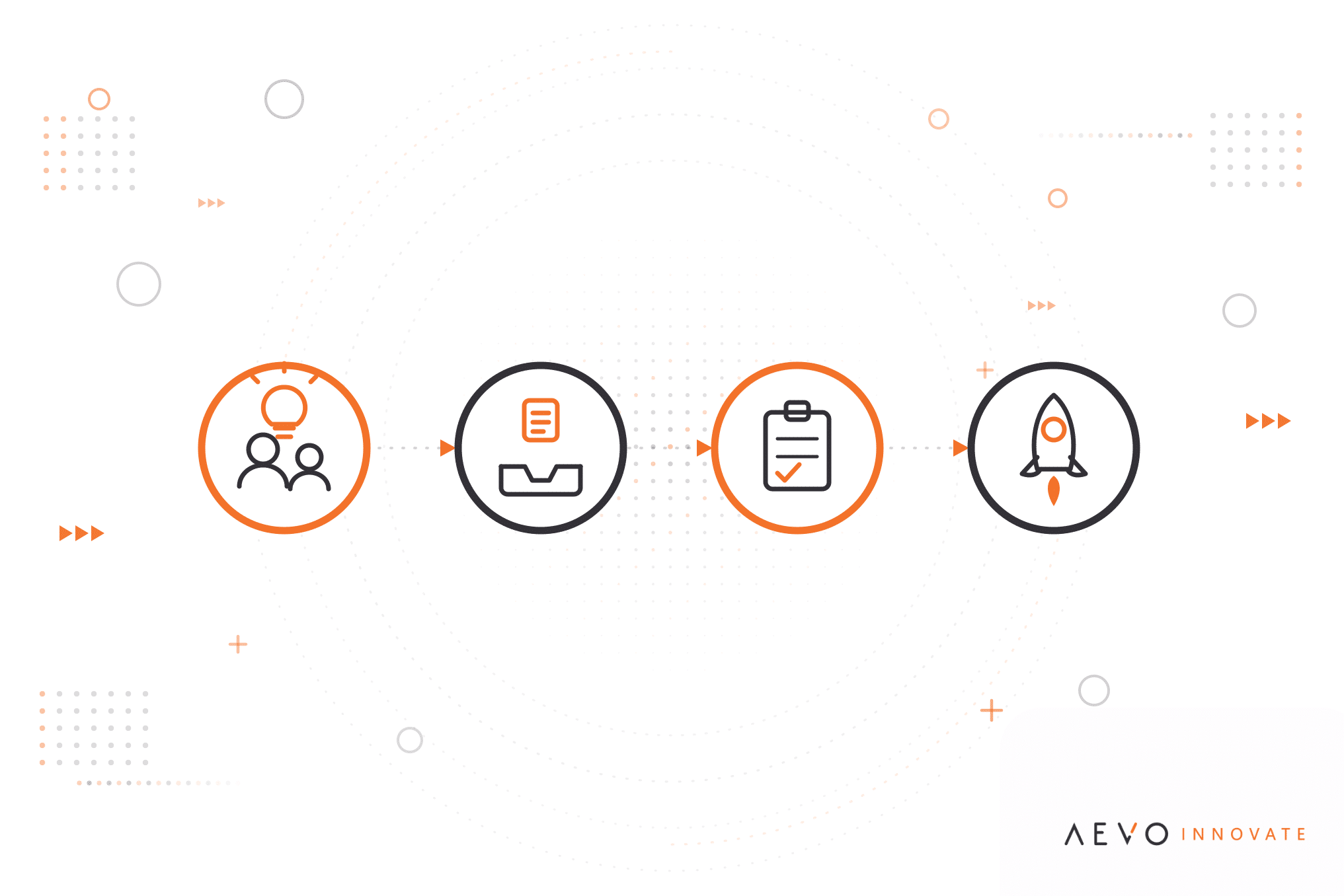
Idea management platforms provide the missing piece for Total Productive Maintenance. Instead of depending on paper forms or informal channels, these platforms create structured workflows where every idea is:
- Collected from any shift, site, or region.
- Evaluated according to TPM-related KPIs such as OEE, MTTR, or MTBF.
- Tracked transparently with real-time status updates.
- Rewarded through gamification and recognition programs.
Interestingly, while most companies still rely on traditional talent strategies, hiring skilled workers and offering standard training, fewer than one-third experiment with gamification or incentive programs. Yet among those who do, nearly half find these methods “very effective.” For TPM leaders, this reinforces the value of recognition systems and gamified engagement to sustain participation, reduce fatigue, and turn maintenance routines into a source of motivation (PwC, 2025).
For example, BIC adopted AEVO Innovate’s idea management solution to support its TPM deployment. The company moved from a few dozen ideas per year to thousands, with clear visibility of impact on production lines and a recognition system that sustained engagement (BIC, 2023).
Similarly, Thyssenkrupp reported a fourfold increase in implemented ideas once structured idea management workflows were integrated with its operational excellence strategy (Thyssenkrupp, 2024).
Balanced Scorecard for TPM and Continuous Improvement
One of the main struggles for Total Productive Maintenance leaders is showing the link between shop-floor improvements and business strategy. Frameworks like the Balanced Scorecard are increasingly used to integrate TPM metrics into broader strategic dashboards.
With idea management, manufacturers can:
- Tag suggestions to specific strategic goals or OKRs.
- Track cost savings and productivity improvements from implemented ideas.
- Provide executives with real-time dashboards connecting frontline innovation to financial outcomes.
This aligns with a broader operational paradox highlighted by PwC and Deloitte, 2025: while hyped technologies like AI (59% adoption) and Cloud (56%) dominate boardroom agendas, “boring” but practical tools such as Digital Twins (97% effectiveness among users) or IoT-enabled supply chains (52% very effective) deliver more consistent results. For TPM, the takeaway is clear: structured, transparent workflows, though less glamorous, are the true drivers of measurable impact.
This turns TPM from a technical maintenance tool into a strategic driver of competitiveness.
From TPM to a Culture of Innovation
The industrial landscape is changing rapidly, driven by Industry 4.0, supply chain volatility, and sustainability demands. Total Productive Maintenance remains essential, but its true potential is unlocked when combined with a systematic approach to capturing and scaling ideas.
According to Deloitte, manufacturers that embed continuous improvement into their culture achieve 15–20% higher productivity gains compared to peers that rely solely on technical methodologies (Deloitte, 2023).
By bridging TPM with idea management, companies evolve from reactive maintenance programs to proactive innovation ecosystems; sustaining performance while building resilience for the future.
Before we wrap up, watch this quick video summary.
Conclusion
Total Productive Maintenance has proven to be a robust framework for improving equipment and process reliability. But in today’s competitive environment, its success depends on engaging people at scale and connecting shop-floor actions with strategic priorities.
By combining TPM with modern idea management software, manufacturers can:
- Ensure participation across all levels of the organization.
- Sustain engagement through structured feedback and recognition.
- Link improvements directly to business impact.
In short, idea management elevates Total Productive Maintenance into a continuous innovation engine; transforming operational excellence into a long-term competitive advantage.

References & Further Reading
- McKinsey (2021) – Total Productive Maintenance 4.0
- PwC (2022) – Global Manufacturing Survey
- PwC (2025) – Digital Trends in Operations
- Deloitte (2023) – Manufacturing Industry Outlook
- Deloitte (2025) – Smart Manufacturing
- BIC (2023). Internal case insights on TPM and idea management.
- Thyssenkrupp (2024). Report on continuous improvement initiatives.