The renewable energy industry operates under strict constraints related to asset availability, operational safety, regulatory compliance, and climate goals. In this environment, operational excellence is not just a matter of cost per MWh.
It is about reducing variability, mitigating operational risk, ensuring asset integrity, and increasing productivity through continuous improvement cycles.
Here is a summary audio of today’s reading:
ENGIE Brasil Energia has structured an idea management system with governance, metrics, and automation to transform the team’s tacit knowledge into implemented projects, connecting ideation to R&D, open innovation, and operational performance. These actions form the INOVE Program.
In 2024 alone, ENGIE invested approximately USD 1.774 billion in new projects and asset modernization, in addition to USD 10 million in R&D and USD 731.8K in climate change solutions.
Cumulatively, USD 46 million has been invested in around 200 innovation projects.
These investments are tangible evidence of a pipeline that connects energy efficiency, automation, digitalization, and process safety to operational results.
This track record has yielded remarkable results. In 2025, ENGIE was named the Most Innovative Organization of the Year in the Generation – Large Companies category of the 2025 ANEEL Innovation Award.

The initiative by the Brazilian Electricity Regulatory Agency (ANEEL) recognizes companies with significant contributions to the energy sector through their Research, Development, and Innovation (RDI) programs.
“Innovative solutions are essential to face the challenges of the energy transition. Our innovation activities focus on energy resources, automation, process digitalization, and mitigation of social and environmental impacts.” — Eduardo Sattamini, Country Manager
Origin of the System: From Incentives to Lean Standardization of the Idea Flow
The internal idea program began in 2008. Starting in 2018, ENGIE transitioned from manual records to an idea management system with standardized workflows, funnel visibility, and clearly defined roles.
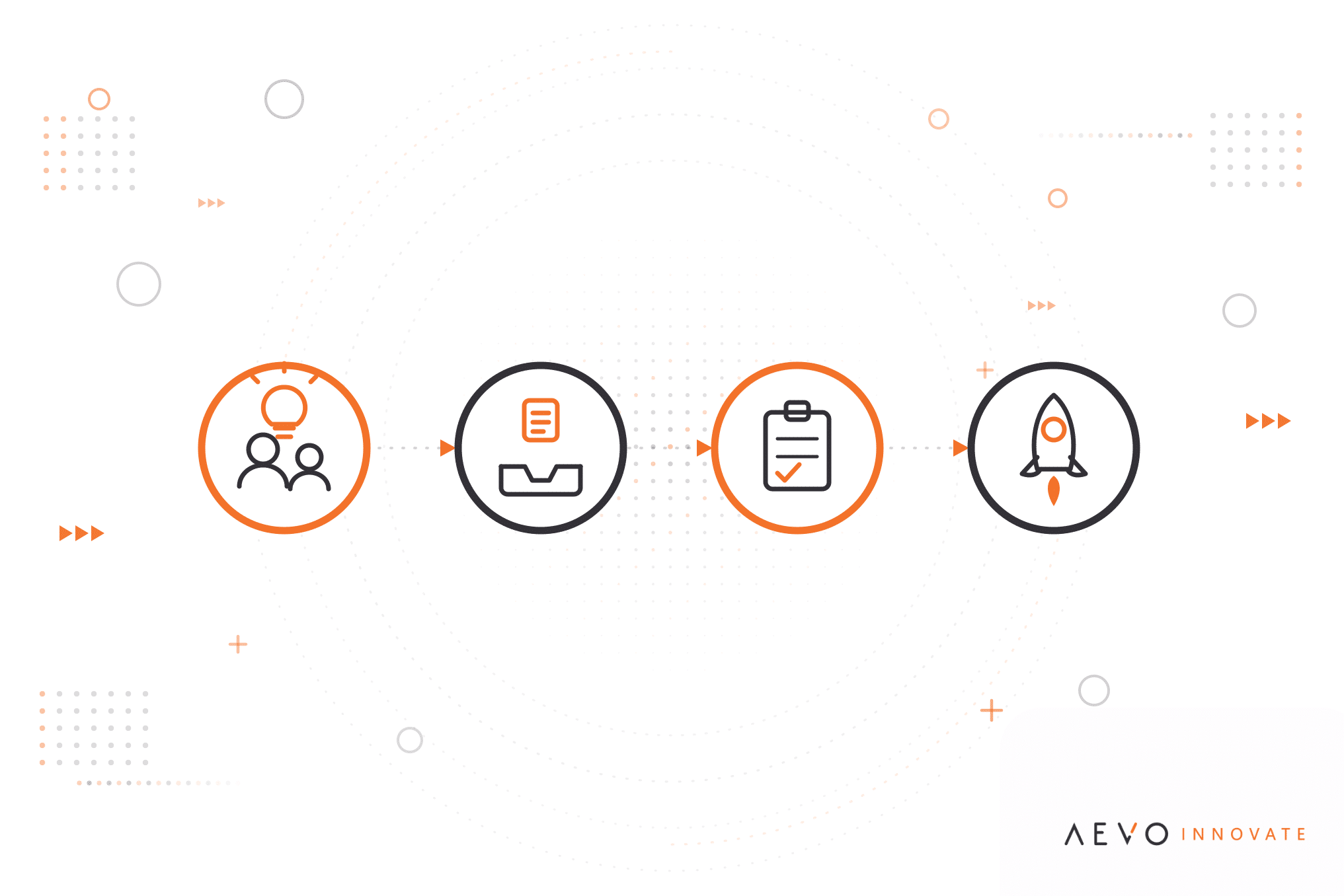
The AEVO Innovate platform enabled a robust cycle of idea capture, screening, evaluation, pilot testing, implementation, and measurement.
The result was governance that combines the autonomy of departments with quality control over the portfolio, reducing submission friction and increasing the idea implementation rate.

From an operational excellence standpoint, the key shift was moving from submission volume targets to targets focused on impactful implemented ideas.
“Today, our goals are no longer about the number of submissions, but about implemented ideas. That reflects the maturity of both the system and ENGIE Brasil Energia’s innovation culture.” — Caroline Luciane Broering Dutra
The implementation of new operational tools often raises concerns about user adoption and engagement.
ENGIE adopted communication and engagement strategies that quickly captured employees’ interest. Through an internal campaign themed “Take Your Ideas Out of Your Head,” the idea program was launched, with promotional posters placed along hallways, mirrors, and common areas.
The message was clear: to innovate is to express what each employee has in mind.
“We launched the platform with light, fun communication that connected all teams. Today, the program runs almost by itself, the culture has taken root.” — Jéssica Ronconi, Innovation and R&D Analyst – ENGIE
Organizational Architecture: Cross-Functional Innovation with Process Owners
ENGIE operates its program with the support of innovation ambassadors, focal points who connect operations, engineering, maintenance, and the idea management team. This group is affectionately called the Tactical Core within ENGIE Brasil Energia.
This model establishes improvement cadence within teams and accelerates the evaluation process, reducing decision time and facilitating the scaling of best practices across areas.
“We are not the ones who ‘do innovation.’ We act as facilitators. Innovation permeates every department.” — Caroline Luciane Broering Dutra
Engagement and Inclusion Metrics: The Network Effect in the Funnel
The professionalization of the process increased engagement and diversity within the pipeline. Between 2023 and 2024:
- Women in the program: +330%
- Participants from solar and wind plants: +357%
- Total participating employees: +59%
- Registered ideas in INOVE: +282%

From Insight to Product: The “Arataca” Case
A real operational need, the lack of suitable market solutions, internal technical expertise, and governance to invest in a prototype formed the foundation of Arataca, a device for detecting electrical leakage to the ground.
The initiative was born from an employee’s idea at ENGIE.
Currently, the project is developed in partnership with CERTI/EMBRAPII and is in the stage of seeking a technology partner to commercialize the product.

The plan is to have 20 prototypes tested and approved across 20 assets nationwide by November 2025, as part of the Pioneer Batch initiative, marking the beginning of the implementation of this innovative, high-potential solution.

This case exemplifies the system’s maturity: the idea workflow is integrated with R&D and open innovation. When a solution requires technological complementarity, the mechanism connects to partners, funding, and intellectual property arrangements.
Operational Safety as a System Maturity Metric
In high-criticality companies, Health, Safety, and Environment (HSE) is a primary value driver.
ENGIE uses themed campaigns and executive committees to prioritize ideas that reduce exposure to risk, standardize procedures, improve ergonomics, and promote mental health.
“We have many ideas focused on safety and the environment. Some can’t be measured in traditional ROI, but in lives preserved and environmental impacts reduced.” — Caroline Luciane Broering Dutra
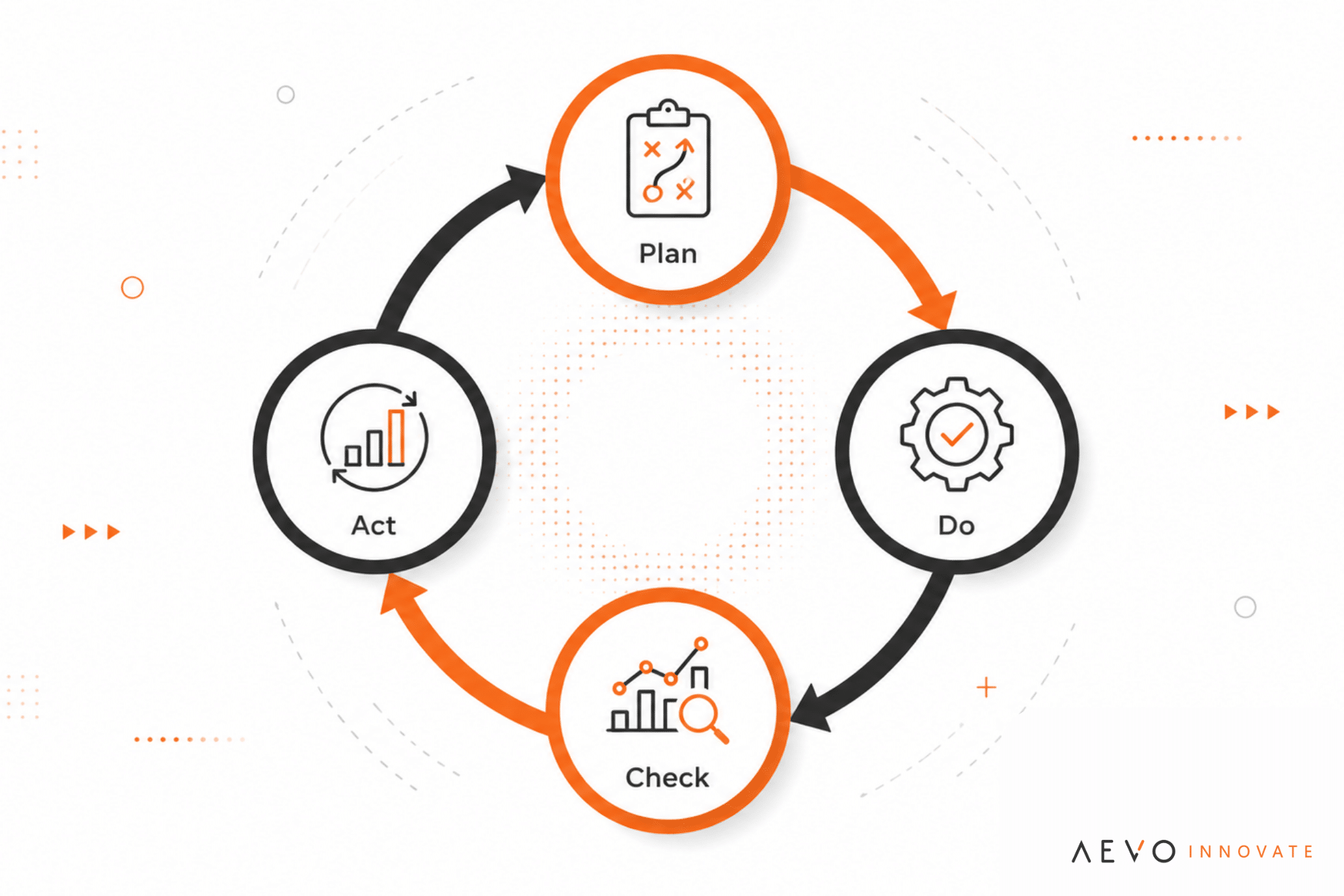
The message to continuous improvement teams is straightforward: when Lost Time Injury Frequency Rate (LTIFR), near misses, and critical deviations improve after standardizations derived from ideas, it is evidence that the improvement system is functioning effectively. The idea program acts as a distributed sensor across the organization, capturing anomalies and kaizen opportunities at the operational edge.
Execution Cadence: From Approval Gate to Go-Live
After approval and resource allocation within the program, ENGIE conducts a kick-off meeting to define responsibilities, risks, milestones, and budgets for implementation.
The typical implementation time is up to 12 months, depending on maintenance windows and generation asset availability.
In 2025, the target was to implement 30 ideas; so far, 39 are in progress. Key metrics include idea lead time and the implementation rate over approvals, guiding actions to remove bottlenecks.
Integration of Mechanisms: From the Idea Pipeline to the Corporate Portfolio
ENGIE consolidates a vision of integrated mechanisms. The idea funnel connects with regulated R&D, Brazil’s Lei do Bem (Innovation Tax Incentive Law), open innovation, and digitalization projects.
Some challenges evolve into market tests with startups; others become projects with technical and scientific partners.
This architecture prevents redundancy, broadens solution sources, and creates multiple value capture paths for the same problem.

AEVO Innovate plays an enabling role in end-to-end traceability, campaign governance, and user autonomy for configurations.
“We have autonomy to create campaigns, adjust forms, and set up evaluation groups. The support is quick and consistent.” — Jéssica Ronconi, Innovation and R&D Analyst
The Future of Continuous Improvement at ENGIE
The company continues to expand the INOVE360 Program, integrating new indicators, campaigns, and methodologies inspired by Lean Manufacturing, with a special focus on improving asset performance.
“Often, the solution to our challenges is already in our employees’ minds. Not using that means wasting one of the company’s greatest assets.” — Juliano Mazute
This statement summarizes the essence of ENGIE’s journey: innovation is not a project, it is a living engine.
Case Summary Table
| Program | INOVE – Corporate idea management integrated with R&D, open innovation, and the Innovation Tax Incentive Law (Lei do Bem). |
| Idea management platform | AEVO Innovate – Configurable workflows, autonomy for campaigns and evaluation groups, audit trails, and funnel metrics. |
| Governance | Ambassadors per asset, executive committees for critical topics (such as the Innovation Forum composed of managers and directors), and approval stages with defined budgets and owners. |
| Engagement 2023→2024 | Women: 26→86 (+330%). Solar/Wind: 14→50 (+357%). Participants: 233→371 (+59%). Registered ideas: 131→370 (+282%). |
| Implementation | 2025 target: 30. Delivered: 39 ideas under implementation. Typical duration up to 12 months, depending on maintenance windows and asset availability. |
| Flagship case | Arataca – Device for detecting ground electrical leakage. Originated as an internal idea, field validated, partnered with CERTI/EMBRAPII, and on the path to becoming an ENGIE product. |
| Safety and environment | Themed campaigns, executive validation. Main value lies in avoided losses and intangibles. |
| Next steps | Deepen benefit metrics, replicate across plants, define funnel SLAs, and achieve full integration among mechanisms. |
Need a refresh? Here is a video for you:
Acknowledgment
AEVO Innovate thanks ENGIE Brasil Energia for its long-term partnership and trust throughout this journey that connects continuous improvement, operational safety, and applied innovation.
We remain committed to enhancing the program’s impact, accelerating implementations, and strengthening operational excellence in the coming cycles.