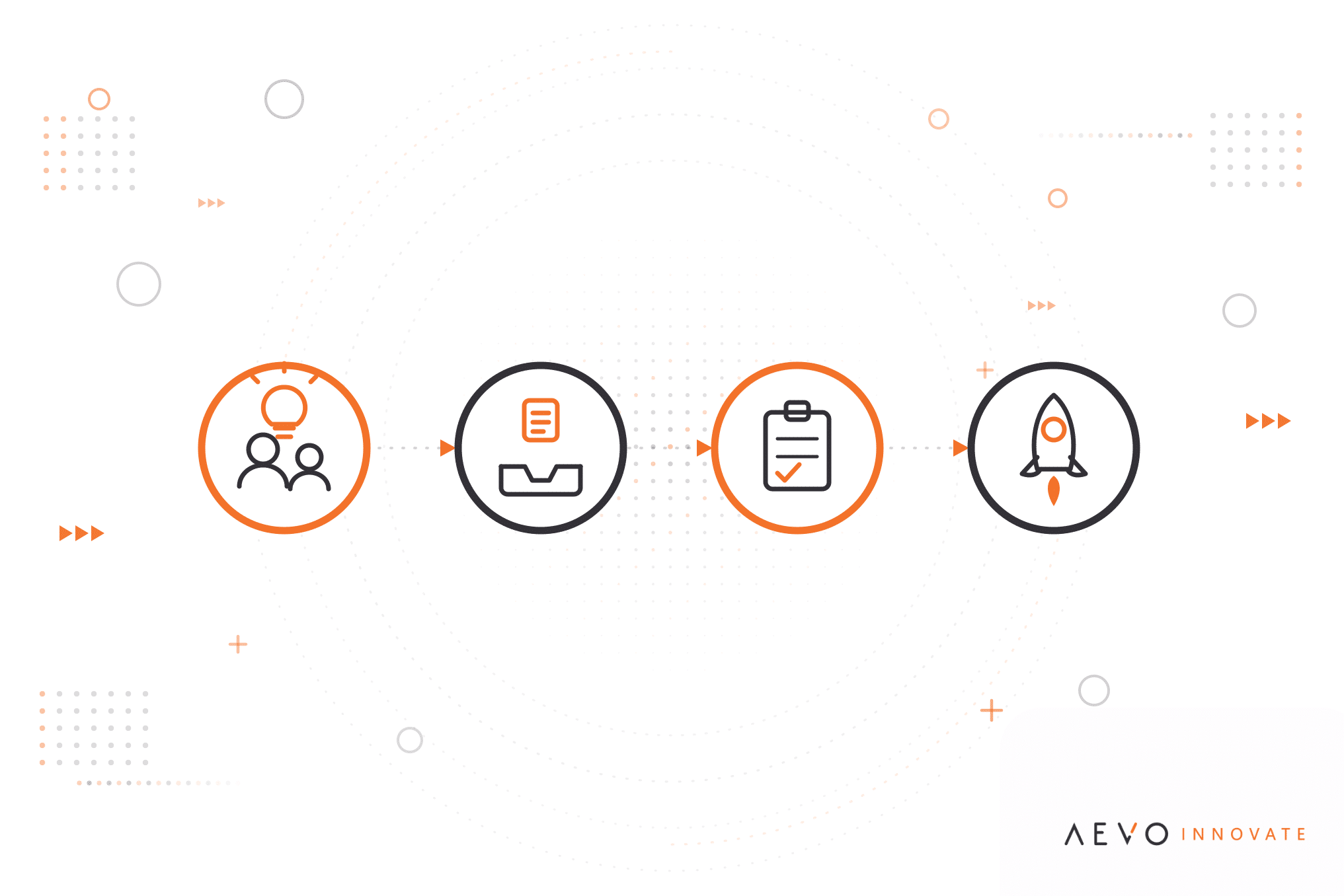
Ideas validation is a crucial part of the innovation process, enabling suggestions and improvements to progress through the ideas funnel, allowing for safer and more assertive implementation.
Time is money. Investing in an idea without proper validation can result in wasting both. Before allocating resources to a new project, it’s essential to ensure it has the potential to become a successful business.
Ideas validation is a necessary process to test hypotheses, understand market demand, and reduce risks, avoiding waste.
Below, we’ll explain what the ideas validation process really is and how to execute it efficiently, ensuring that your time and investment are applied in the best way possible while increasing your chances of achieving positive results in your business. Keep reading or listen to the audio summary here:
Table of Contents
What is ideas validation?
Ideas validation is part of the innovation process and enables suggestions and improvements to advance through the ideas management funnel, allowing for safer and more assertive implementation.
This process ensures that a product, service, or project idea aligns with the company’s strategy or the created campaign. It helps avoid wasting resources on initiatives that lack viability.
Why validate an idea before investing?
Validating an idea before investing is essential because it reduces risks, improves decision-making, and increases the chances of success.
Without this stage, companies might allocate time and money to projects with no real demand, that don’t solve a relevant problem, or don’t fit the organization’s strategic objectives.
Raw idea vs validated idea
A raw idea relates only to an initial concept that hasn’t been tested or analyzed to confirm its viability and business returns.
A validated idea, however, has undergone rigorous evaluations such as market research, user testing, and financial feasibility analysis, demonstrating its potential for successful implementation.
Thus, the process begins with a raw idea, refined until validated and ready to move forward in development.
Learning more: Idea Management Software | AEVO Innovate
Benefits of ideas validation
When considering new projects, ideas validation offers several benefits, ensuring that the most viable suggestions move forward in the ideas management funnel. Key benefits include:
Risk reduction
Investing in an unvalidated project can lead to significant financial and operational losses. Validation allows you to test hypotheses before allocating substantial resources, minimizing errors.
Thus, companies avoid investing time and money in ideas without demand or that don’t add value to their target audience or business.
Better market understanding
Validating an idea provides valuable insights into the market. This includes better understanding consumer behavior and identifying untapped opportunities.
The process also helps uncover market gaps, enabling adjustments to better meet customer needs and stand out from competitors.
Refinements before launch
During validation, it’s possible to collect feedback to refine the idea before its official launch.
This allows for strategic adjustments to the product, service, or project, ensuring alignment with market expectations and increasing the likelihood of early success.
By refining the concept, errors are minimized, the user experience improves, and success chances grow right from the start.
Methods to validate an idea
There are various methods to test hypotheses, gather data, and better understand the market. Consider these approaches:
1. Market research
Before launching anything, one of the first ideas validation steps is market research. This identifies the target audience, understands their needs, and assesses existing demand.
This method can involve analyzing market data, competitors, and trends. Additionally, you can use surveys and interviews for direct consumer feedback.
2. MVP (Minimum Viable Product)
An MVP is a simplified version of an idea, specifically created to test its market acceptance.
This uses minimal resources to create a prototype or test basis, reducing costs and risks. It helps assess product or service performance in a real environment, gathering feedback and making adjustments before final development.
3. Interviews and feedback
Talking directly with potential customers is one of the best ways to validate an idea.
Conducting interviews and gathering feedback helps understand the target audience’s pain points and expectations.
This method can also involve sector experts who can offer insights into value propositions and potential improvements.
4. Landing pages and ads
Besides direct conversations, it’s crucial to test real interest. Creating landing pages and running paid ads allows you to measure public interest before launching your project.
Metrics like click numbers, sign-ups, and interactions can reflect idea visibility and help adjust market communication and promotion strategies.

Step-by-step guide to ideas validation
Ideas validation requires a structured process to turn a concept into a real solution. Follow these steps:
| Step | Description |
|---|---|
| 1. Define the problem your idea solves | To succeed and be well-received, a product or service must address a relevant problem. The first step is identifying which market pain point your idea aims to solve. The clearer this definition, the more relevant your proposed solution will be, and the easier it will be to communicate its value to the audience. |
| 2. Identify and segment the target audience | Identify potential customers and segment them based on behavior, interests, and needs. Knowing who the idea targets ensures testing with the right customer profiles. |
| 3. Create hypotheses and test in practice | Once the problem and audience are defined, create hypotheses about the idea’s acceptance and test them using validation methods for a fast and cost-effective approach. |
| 4. Collect and analyze test data | After testing, gather and analyze results. Metrics such as audience acceptance, conversion rates, feedback, and engagement reveal if the idea truly solves a problem and has market potential. |
| 5. Refine the idea and revalidate | Based on data analysis, refine the idea, correct flaws, and improve it. Repeat the process until the solution is optimized and ready for launch. |
| 6. Monitor idea results | Ideas validation is continuous. Monitoring innovation results allows companies to measure impact and make strategic decisions. Track KPIs like sales growth, engagement, and ROI to ensure tangible outcomes. |
Successful examples of ideas validation
Large corporations, as well as small and medium enterprises, can use ideas validation to turn concepts into profitable businesses. Many market giants went through this process before reaching prominence.
Uber
Before becoming a global phenomenon, Uber initially launched as a premium private car service called UberCab in San Francisco, USA, after co-founder Garrett Camp identified a taxi shortage.
The company conducted an initial test in a specific market to understand acceptance in a limited area before expanding (in other words, it created an MVP).
Based on user feedback, they adjusted prices, driver partnerships, and app experience until achieving a scalable format.
Dropbox
Before fully developing their software, Dropbox’s founders used a demo video to explain their service concept; essentially a landing page to test preliminary interest.
The video went viral, generating a waiting list of thousands of interested users. This validated the demand even before product development, ensuring there was a market ready to use it.
Tools for ideas validation
Various tools support ideas validation, making the process more structured and efficient. Here are four essential ones:
Ideas program
An ideas program is a corporate initiative that gathers insights and suggestions from employees to solve business challenges, improve processes, and create new products.
Besides fostering creativity and innovation, this tool adds value by promoting resource savings, operational efficiency, and greater satisfaction among customers and employees.
Proof of Concept (PoC)
A PoC is a practical model that tests an idea’s feasibility before large-scale implementation. Through prototypes or MVPs, it evaluates solution adherence to the market, optimizing investments and minimizing risks.
SCAMPER
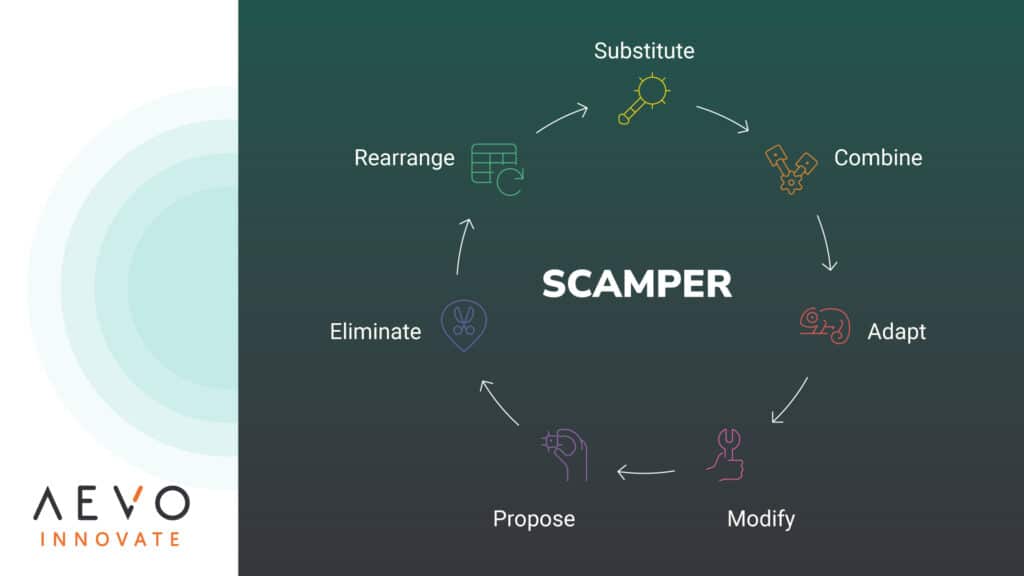
SCAMPER is a structured brainstorming tool that aids idea generation and refinement. It’s based on seven actions: Substitute, Combine, Adapt, Modify, Put to another use, Eliminate, and Rearrange.
This methodology helps companies innovate by exploring different perspectives to develop more efficient products and services.
Ideas funnel
An ideas funnel systematically collects, selects, and develops suggestions within an organization. Like a physical funnel, it filters proposals, ensuring only the most promising advance.
This method enables thorough evaluation, efficient resource allocation, and alignment with the company’s strategy.
Validating ideas can sound complex, but the concept is simple: it’s about testing before investing. To make it easier, we’ve prepared a short video that summarizes the essentials of the ideas validation process — why it matters, how it reduces risk, and the steps companies use to ensure resources are invested wisely.
Conclusion
Ideas validation is a crucial step in the innovation process, ensuring ideas don’t get lost over time and that innovation truly happens.
If your company needs help managing the entire innovation process, from idea to implementation, you can count on AEVO Innovate.
AEVO Innovate offers a complete innovation management platform, combining technology to structure and manage the entire innovation process with expert consulting that designs and implements projects tailored to each business’s challenges and needs, adding value and delivering effective results.