The Hoshin Kanri methodology (Japanese for “compass management”) is a strategic planning process that originated in Japan during the 1950s and 1960s, heavily influenced by quality practices such as Total Quality Management (TQM).
Developed by companies like Toyota, the method was designed to ensure that an organization’s goals are effectively deployed and implemented across all levels, connecting long-term vision to daily operations.
In today’s corporate world, having a clear strategic plan is no longer a competitive advantage; it’s a necessity. However, one of the biggest challenges remains: turning strategy into concrete actions and ensuring everyone in the organization is aligned.
That’s where the Hoshin Kanri methodology comes in. This Japanese approach has gained traction globally for its efficiency in linking long-term planning with everyday execution. You might know it as policy deployment or goal cascading, a concept that could transform how your organization plans and delivers results.
Table of Contents
Here is a summary audio of today’s reading:
What Is the Hoshin Kanri Methodology?
According to the Lean Lexicon, a glossary for Lean practitioners, Hoshin Kanri is “a management process that aligns (both vertically and horizontally) the functions and activities of an organization with its strategic objectives.”
In simple terms, the core purpose is to transform strategy into coordinated action, ensuring that everyone from executives to frontline teams works toward the same goals.
Unlike traditional top-down models, Hoshin Kanri uses a collaborative process known as Catchball, where leadership and teams share responsibility, negotiate priorities, and refine goals together. This enhances engagement and ensures clarity in executing strategic initiatives.
Key Principles of Hoshin Kanri Methodology
To be effective, the methodology is built on four core principles:
1. Alignment Between Strategy and Execution
A brilliant strategy is useless if it doesn’t reach those who execute it. Hoshin Kanri ensures that each daily task contributes to broader company goals by cascading strategic objectives into tactical and operational plans. This minimizes wasted effort and improves execution.
2. Involvement at All Organizational Levels
Decision-making isn’t isolated. Everyone, from executives to frontline workers, participates in goal-setting and deployment through the Catchball process. This dialogue improves decision quality and boosts accountability.
3. Clear Communication of Objectives
Transparency is essential. Hoshin Kanri emphasizes direct and clear communication of strategic objectives, ensuring all employees understand how their work fits into the bigger picture.
4. Continuous Improvement and Learning
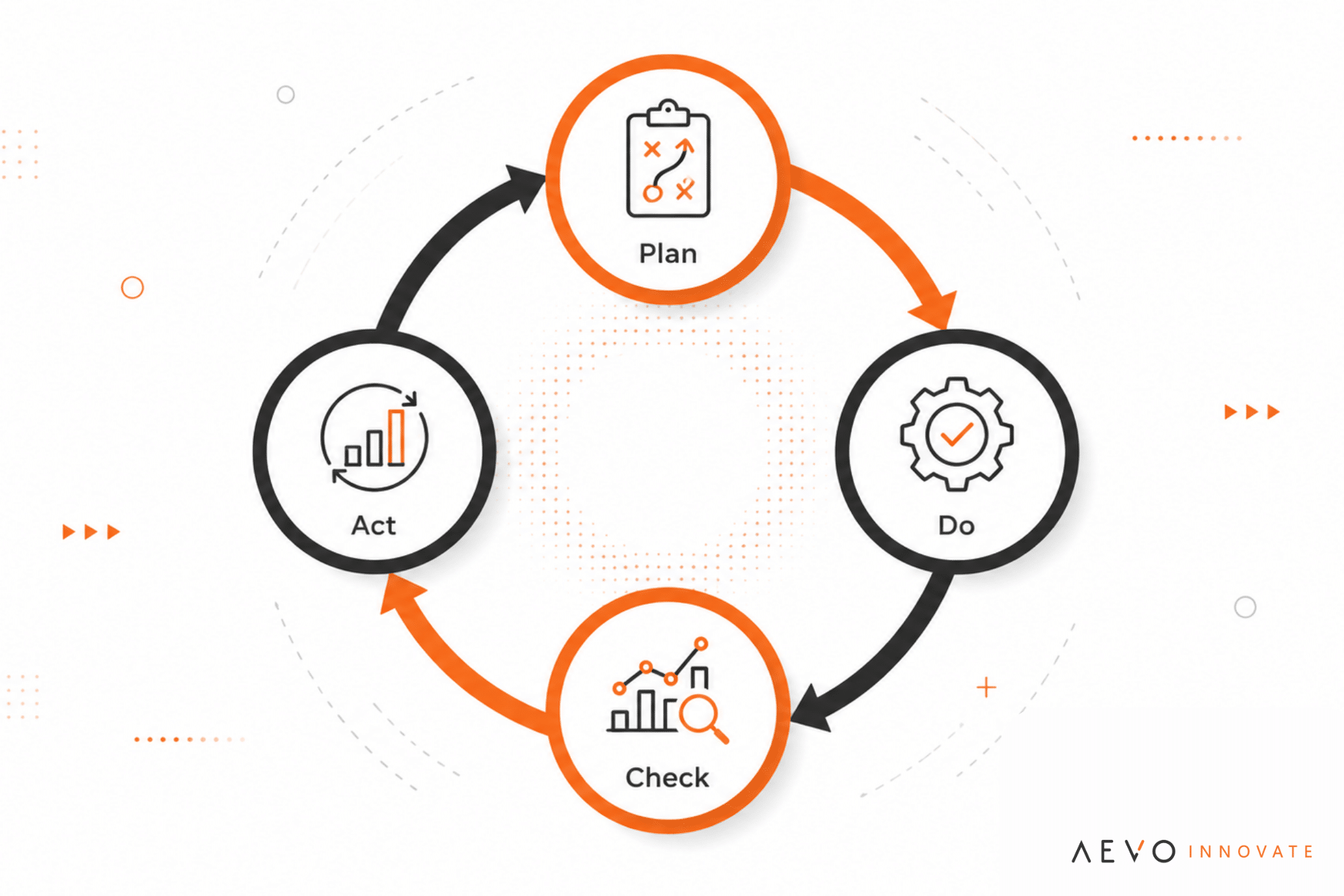
The methodology encourages ongoing reviews and adjustments based on feedback and performance data. Using continuous improvement tools like the PDCA (Plan-Do-Check-Act) cycle helps organizations remain agile and adaptive.
The Hoshin Kanri Methodology Process in 5 Steps
1. Define Vision and Strategic Objectives
Start with the question: “Where do we want to go?” Leadership defines long-term vision (usually 3–5 years) and key strategic objectives. Tools like SWOT analysis help prioritize goals.
2. Deploy Goals Using Catchball
Next comes goal deployment. Instead of issuing directives, leaders engage teams in collaborative planning. For example, if the goal is to improve customer satisfaction by 20%, the customer service team may suggest reducing response times or improving feedback systems.
3. Plan Actions and Define KPIs
Now it’s time to assign responsibilities, set deadlines, and define key performance indicators (KPIs) to track progress. These metrics act as compasses, guiding the implementation and enabling course correction when needed.
4. Execute and Monitor
Execution begins here. Managers should regularly monitor performance through disciplined routines—such as stand-up meetings—to identify bottlenecks, align teams, and ensure progress.
5. Review and Continuously Improve (PDCA)
Built into Hoshin Kanri is the PDCA cycle. Teams review performance, learn from results, and adjust strategies accordingly. This keeps the strategy responsive and relevant over time.
Benefits of the Hoshin Kanri Methodology
| Benefit | Description |
|---|---|
| 1. Organizational Alignment | By breaking down strategic goals into clear operational targets, Hoshin Kanri ensures every department moves in the same direction. This alignment prevents duplicated efforts and fosters synergy across teams. |
| 2. Strategic Focus and Prioritization | The methodology helps organizations focus on what truly matters. Instead of dispersing energy across multiple initiatives, teams concentrate on high-impact actions. |
| 3. Waste Reduction and Efficiency | With clearly defined plans and measurable metrics, the method reduces errors, prevents miscommunication, and eliminates rework, leading to leaner, more efficient processes. |
| 4. Greater Engagement and Accountability | The Catchball approach encourages collaboration and shared ownership. When teams co-create plans, engagement and commitment to results increase significantly. |
| 5. Adaptability and Competitive Edge | Organizations using Hoshin Kanri build a results-driven culture capable of adapting quickly to market changes, translating agility into sustained innovation and growth. |
How to Implement Hoshin Kanri Methodology in Your Company
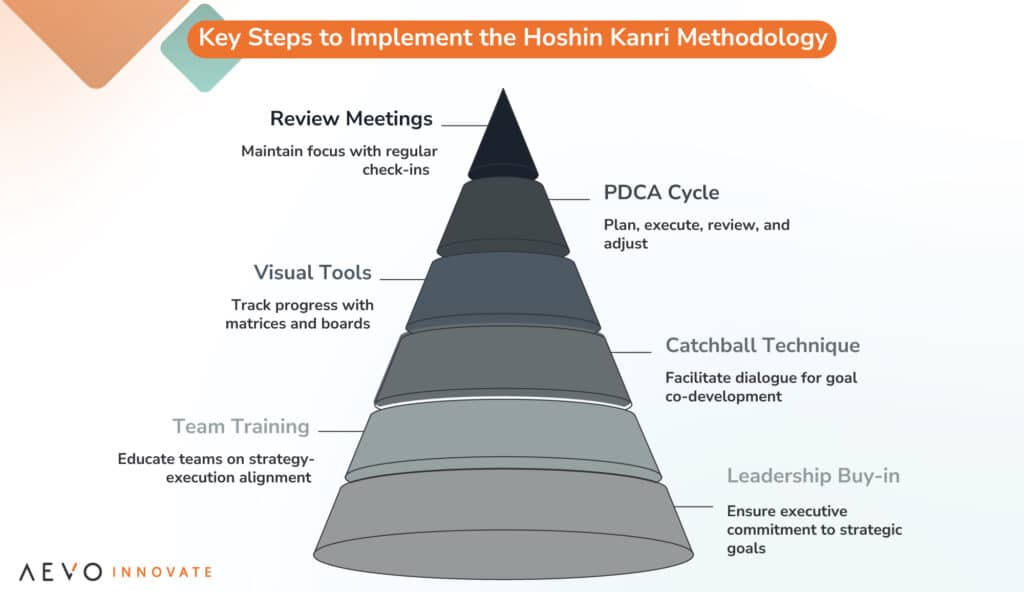
- Gain Leadership Buy-in: Ensure top-level executives are committed to the methodology and actively involved in defining strategic goals.
- Train Teams: Educate teams on the Hoshin Kanri methodology, focusing on alignment between strategy and execution.
- Use the Catchball Technique: Facilitate dialogue between leadership and teams to co-develop goals.
- Leverage Visual Tools: Use matrices, boards, or software to track progress and make goals transparent.
- Apply the PDCA Cycle: Plan, execute, review, and adjust based on performance data.
- Hold Regular Review Meetings: Short, frequent check-ins help maintain focus and adjust quickly.
Real-World Examples of Hoshin Kanri Methodology
Toyota
Toyota uses Hoshin Kanri to align innovation in hybrid vehicles with sustainability goals. The company cascades environmental targets across departments and uses ongoing reviews to stay ahead of regulations and technology shifts.
Itaú Unibanco
Brazilian banking giant Itaú Unibanco applies Hoshin Kanri to maintain focus on digital transformation and customer experience. With structured goal deployment and regular performance reviews, the bank stays aligned with long-term strategic priorities.
Need a refresh? Here is a video of the main concepts for you:
Conclusion
The Hoshin Kanri methodology is a versatile approach that helps organizations bridge the gap between strategy and execution.
To maximize its potential, it’s essential to pair it with the right tools and support.
Talk to one of our specialists and discover how AEVO Innovate can help your company implement the Hoshin Kanri methodology and deliver real results.