Employee engagement is a key feature in manufacturing. Let’s agree on that?
And industry leaders are under immense pressure. They face a perfect storm of rising costs, persistent labour shortages, and the constant demand to do more with less. Many organisations have tried to solve these issues with technology, process optimisation, and top-down initiatives. But a critical element is often overlooked, leading to a cycle of high turnover and stagnant productivity.
The statistics paint a stark picture. The manufacturing industry has one of the lowest employee engagement rates, with some reports indicating that as many as three-quarters of employees are disengaged. This isn’t just a morale issue; it has severe financial consequences.
In 2020, the U.S. manufacturing sector saw a turnover rate of 44.3%, and 62% of organisations reported an increase in turnover year-over-year. When only 48% of manufacturing leaders believe their frontline workers feel engaged, it’s clear that a fundamental disconnect exists between the shop floor and the C-suite.
This article explores why genuine employee engagement is not a luxury but the essential catalyst for achieving true manufacturing excellence.
Listen to a summary of this blogpost:
The Critical Link: How Engagement Fuels Productivity, Safety, and Innovation
What does an engaged employee look like? They are emotionally invested in their work and committed to the organisation’s success. This commitment translates directly into tangible business outcomes that are crucial for any manufacturing operation.
- Increased Productivity and Quality:
Engaged employees are the heartbeat of an efficient production line. They are more focused, proactive in solving problems, and willing to go the extra mile to minimise bottlenecks and streamline workflows. This emotional investment leads to a profound sense of ownership over their work, which is critical for quality control.
They don’t just follow a process; they are invested in the final product, actively spotting potential defects and ensuring every item meets company standards. The data is clear: disengaged employees are 60% more likely to make mistakes, while an engaged workforce can be 70% more productive than their disengaged peers.
- A Safer Work Environment:
In an industry where working conditions can be challenging – with excessive noise, long shifts, and physically demanding tasks – safety is paramount. Disengagement is a direct threat to a safe workplace.
A distracted or disconnected worker is more prone to accidents. Research shows that disengaged employees have 49% more work-related injuries, whereas highly engaged teams experience 70% fewer safety incidents. When employees feel psychologically and physically safe, valued, and supported by their leadership, they are more focused and more likely to adhere to and improve safety protocols.
- A Powerhouse for Innovation:
Perhaps the most undervalued benefit of employee engagement is its role in fostering continuous improvement and innovation. Frontline employees see problems and opportunities that managers simply cannot.
According to the 80/20 Principle of Improvement, roughly 80% of an organisation’s potential for improvement lies in front-line ideas, with only 20% coming from management-driven initiatives. When employees are disengaged, this vast well of creativity and practical knowledge remains untapped. An engaged workforce, however, becomes an engine for innovation, constantly suggesting small, practical ideas that lead to significant cumulative gains.
From Theory to the Shop Floor: Engagement in Action
How does this translate to the real world? Several manufacturing companies have achieved remarkable turnarounds by prioritising their people.
Consider the case of a Coca-Cola bottling plant in Stockholm. The facility struggled with a recurring problem on its bottling line that caused frequent shutdowns and significant product waste. Two separate Six Sigma black belt project teams failed to solve the issue.
The solution came from a single frontline worker, who suggested a simple, low-cost fix: using a steel washer to slightly angle a guide rail, which reduced friction and prevented bottles from jamming. In one year, the plant’s 1,720 front-line ideas generated 8 million SEK in savings, accounting for 76% of the facility’s total cost improvements; far surpassing the impact of its formal, management-led projects.
In another powerful example, a prominent food manufacturing company was facing a staggering $20 million annual employee retention problem due to low engagement and a strained supervisor-employee relationship. By implementing a program focused on listening to employees through confidential sessions and involving them in creating solutions, the company saw a dramatic shift. Within just 12 months, employee retention jumped from 51% to 84%, and the percentage of employees who felt valued by the company nearly doubled from 38% to 71%.
Bridging the Gap: How Digital Platforms Structure Engagement
A major obstacle to employee engagement in manufacturing is the very nature of the work environment. With shift-based schedules, limited digital access for frontline workers, and siloed communication, it is difficult to keep everyone connected and informed. Traditional methods like bulletin boards, company-wide emails, and newsletters often fail to reach the entire workforce, leaving non-desk employees feeling isolated and unheard.
This is where modern digital platforms, such as employee engagement apps and idea management software, become game-changers. These tools are designed to overcome the unique communication barriers in manufacturing by:
1. Providing a Centralised Hub for Communication: Mobile-first platforms deliver real-time updates on safety protocols, shift changes, and company news directly to every employee’s device, regardless of their location or shift. This ensures consistent messaging and builds trust through transparency.
2. Enabling Two-Way Feedback: Effective engagement requires a two-way street. Digital tools like pulse surveys, anonymous feedback channels, and comment features empower employees to share their ideas and concerns, making them feel heard and valued. When leaders act on this feedback, trust is reinforced.
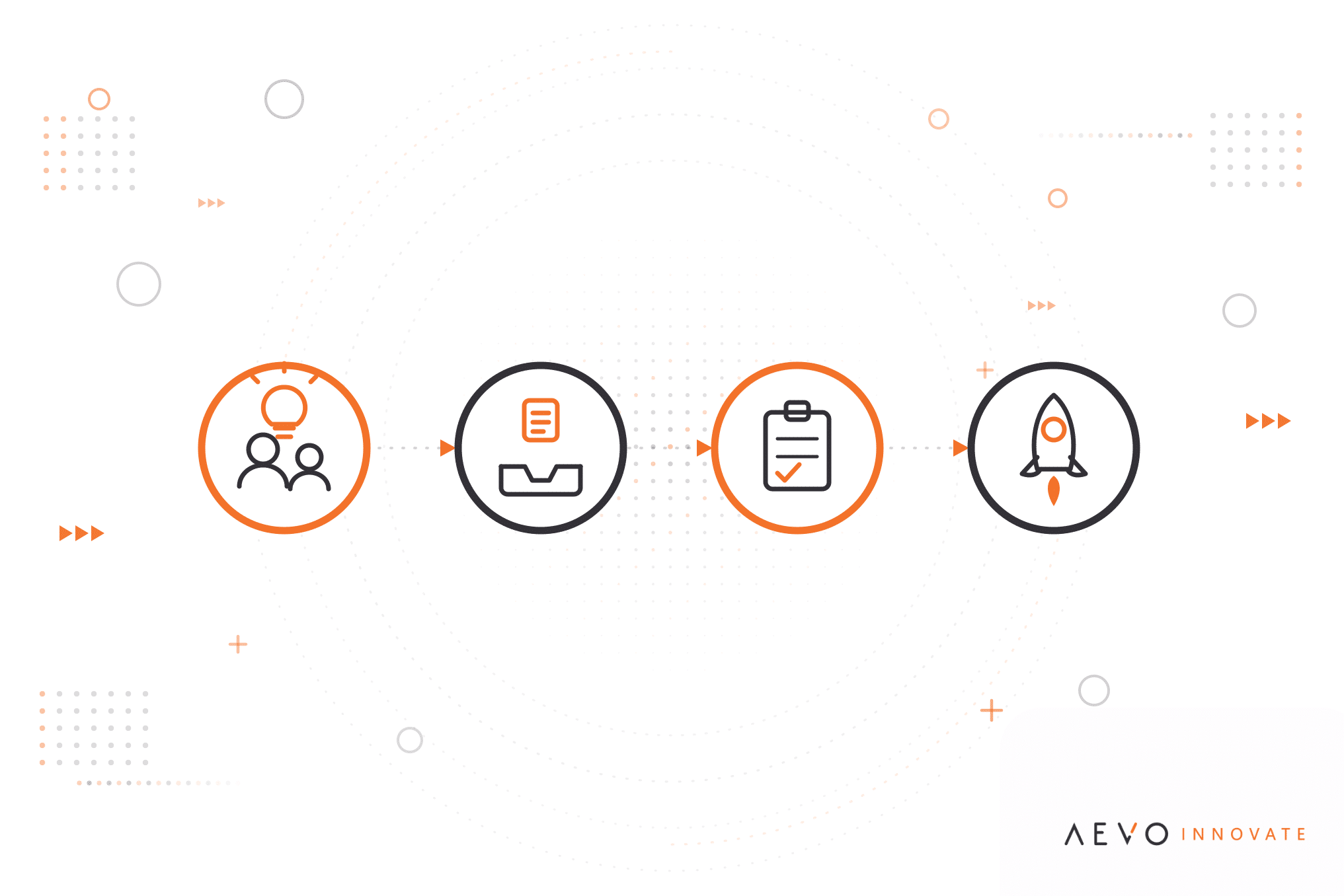
3. Structuring Idea Management: To tap into the 80% of improvement potential from the frontline, organisations need a systematic way to capture, evaluate, and implement ideas. Old-fashioned suggestion boxes often become “idea graveyards” where submissions disappear, causing frustration.
Digital idea management platforms like AEVO Innovate are designed to prevent this. They provide a structured, end-to-end process for innovation. Using Generative AI, these platforms can assist employees in crafting well-structured ideas, automatically identify experts to evaluate submissions, and even provide an estimated ROI, significantly reducing the time and bottlenecks associated with manual review.
Case studies show this approach yields incredible results, with one company, Energisa, capturing over 16,000 ideas after adopting the platform, and another, Ajinomoto, achieving a 16x return on its investment.
Employee engagement isn’t just about morale – in manufacturing, it directly drives productivity, safety, and innovation. This short video explains why it’s the missing piece in achieving manufacturing excellence.
The Path to Excellence Starts with Your People
In the quest for manufacturing excellence, it’s easy to get lost in metrics about output, efficiency, and technology. But the most successful and resilient organisations understand that their greatest asset is their people. Employee engagement in manufacturing is the essential, often-missing piece that connects your workforce’s potential to your company’s performance.
By fostering a culture of trust, recognition, and two-way communication – and empowering it with the right digital tools – you can unlock a virtuous cycle of improved productivity, enhanced safety, and relentless innovation that will define your success for years to come.
Ready to unlock the missing piece in your manufacturing excellence strategy? Download our comprehensive guide on building an idea-driven culture or schedule a benchmarking call with our experts today to see how these principles can transform your operations.

Glossary of Key Terms
| Term | Definition |
| 80/20 Principle of Improvement | The principle that approximately 80% of an organization’s potential for improvement comes from frontline employee ideas, while only 20% comes from management-driven initiatives. |
| ADKAR Model | A model used in leadership development to successfully implement change by considering its five elements: Awareness, Desire, Knowledge, Ability, and Reinforcement. |
| Continuous Improvement | An ongoing effort to improve products, services, or processes. In the context of manufacturing, it is often fueled by ideas from frontline employees and is a core tenet of methodologies like Lean and Kaizen. |
| Employee Engagement | The level of emotional investment, commitment, and identification an employee has with their organization and its success. Engaged employees are willing to go the extra mile and are proactive in their roles. |
| Employee Net Promoter Score (eNPS) | A metric derived from employee surveys that measures employee loyalty and their likelihood to recommend their company as a great place to work. |
| Employee Recognition | The act of acknowledging and appreciating an employee’s efforts, contributions, and achievements through non-tangible forms like verbal praise, written notes, or public acknowledgment. It is viewed as more authentic and helps build a positive workplace culture. |
| Employee Rewards | Tangible incentives, such as bonuses, gift cards, or extra time off, given to employees in exchange for their performance or for meeting specific targets. |
| Idea-Driven Organization | An organization designed and led to systematically seek and implement large numbers of ideas from everyone, particularly from frontline employees. It is directed from the top but driven by ideas from the bottom. |
| Kaizen Teian Process | A Japanese model for idea management focused on encouraging and implementing a high volume of small ideas for continuous improvement. |
| Non-Desk Employees (NDEs) | Workers, particularly prevalent in manufacturing, who do not work at a desk and often lack access to traditional corporate communication channels like email or an intranet. They are also referred to as frontline workers. |
| Psychological Safety | An environment where employees feel safe to voice opinions, admit mistakes, and offer suggestions without fear of punishment or humiliation. It is a key driver of trust and engagement. |
| Pulse Surveys | Short, frequent surveys sent to employees to gauge sentiment and gather real-time feedback on specific topics, allowing for quick action and course correction by leadership. |
Sources & Further Reading
1. The Idea-Driven Organization: Unlocking the Power in Bottom-Up Ideas by Alan G. Robinson and Dean M. Schroeder
- This book is the source for the 80/20 Principle of Improvement and the detailed Coca-Cola bottling plant case study. It provides the core argument that the vast majority of performance improvements come from frontline employees.
2. “Reversing Low Employee Engagement In Manufacturing” from Forbes
- This article provides the Gallup statistics highlighting that manufacturing is among the least engaged industries and that engaged companies report 70% fewer safety incidents.
3. “10 Ways to Boost Employee Engagement in Manufacturing Companies” from Vantage Circle
- This post is the source for data points such as 62% of manufacturing organisations seeing an increase in turnover and only 48% of leaders believing their frontline workers feel engaged.
4. “How to Build Employee Engagement in the Manufacturing Industry” from Staffbase
- This article details the unique communication challenges in manufacturing, including limited digital access for non-desk employees, shift work, and siloed channels, which create barriers to engagement.
5. “Employee Engagement – How Manufacturers Tackle the Labor Shortage” from Alphanova Consulting
- This report provided critical data on the consequences of disengagement, noting that disengaged employees are 60% more likely to make mistakes and have 49% more work-related injuries.
6. Food Manufacturer Overcomes $20M Retention Challenge [Case Study] from People Results
- This case study details the turnaround of a food manufacturer who, by focusing on employee engagement, improved retention from 51% to 84% in just one year.