Based on insights shared by Paula Suliem Correa, Senior Innovation Leader, during AEVO Innovate’s webinar “Cross-Border and International Idea Management: How to Break Silos and Democratize Innovation.”
Table of Contents
The New Frontier of Cross-Border Idea Management
In multinational organizations, ideas rarely fail because they lack potential. They fail because they hit borders: regulatory, cultural, or organizational. Paula Suliem Correa argues that the real challenge of cross-border idea management is not technology, but structure.
Her framework, developed through years of industrial and corporate practice, redefines how ideas are collected, evaluated, and scaled across countries, while maintaining fairness, compliance, and operational excellence.
Listen to this blog post’s summary:
Lesson 1: Front-Load the Work. Judge Ideas on Merit, Not Hierarchy
In traditional settings, ideas rise through sponsorship and politics, not necessarily merit. Correa’s method begins with anonymized intake, ensuring each submission is assessed on evidence rather than seniority.
“Make the idea the unit of value,” she notes.
By asking for early rigor (including a Technology Readiness Level (TRL) tag, PESTEL impact per jurisdiction, and a short shop-floor validation log) reviewers can evaluate on substance, not influence.
The outcome? High-quality ideas that might have died locally get routed globally, unlocking cross-border funding or consortium opportunities.
This approach also mitigates what Correa calls “innovation waste,” the repetition of identical pilots across sites simply because knowledge isn’t shared.
Learning more: Idea Management Software | AEVO Innovate
Lesson 2: Fix the Innovation Ramen Paradox
One of the most memorable ideas in Correa’s talk was the Innovation Ramen Paradox:
We expect long-term innovation to be fast and cheap, homemade quality at instant-noodle speed and cost.
Executives often demand quick, low-budget wins while expecting sustainable transformation.
Cross-border idea management and innovation requires the opposite mindset: invest early to scale wisely.
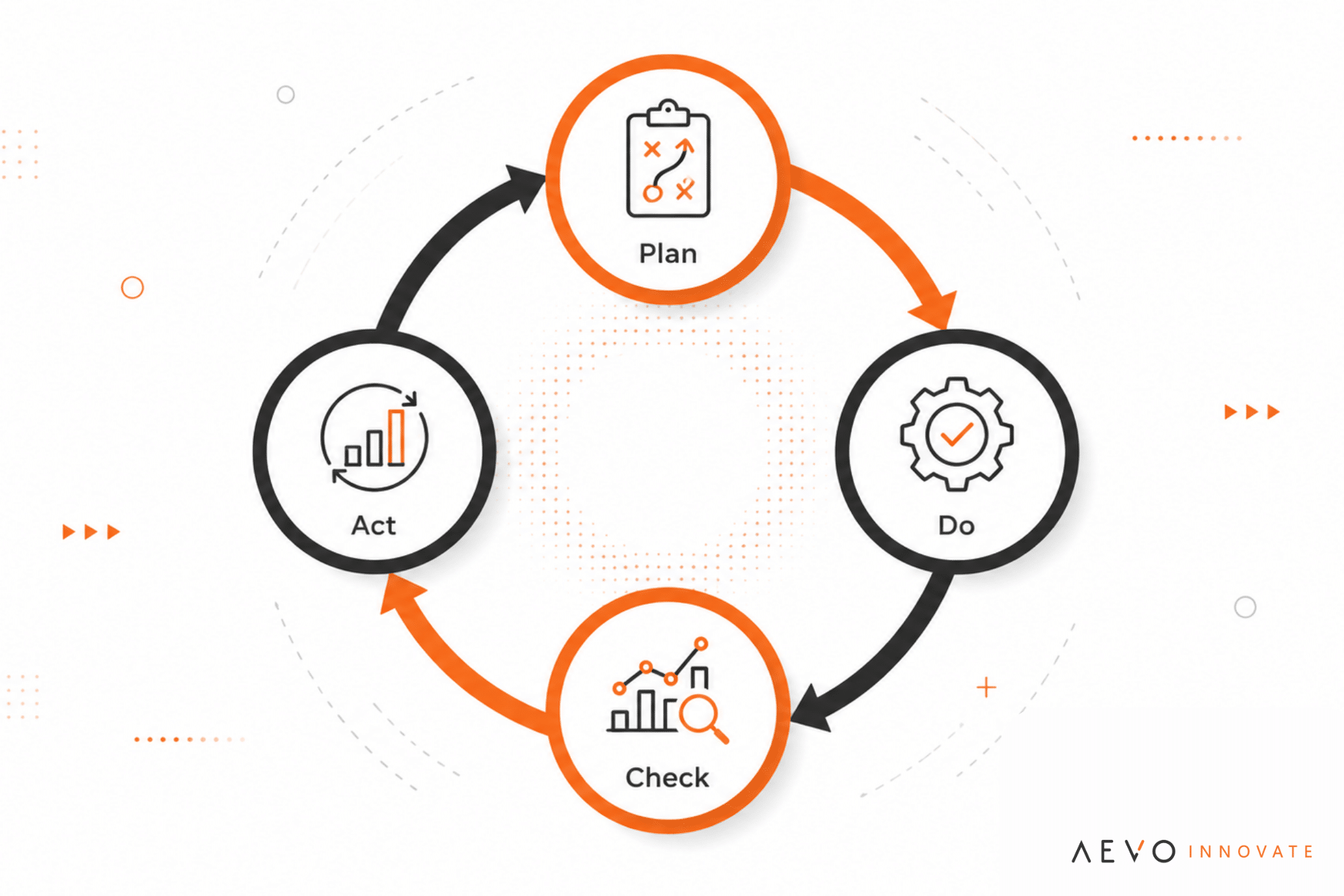
Paula proposes combining Operational Excellence (OE) and Continuous Improvement (CI) loops into every pilot. Each experiment captures metrics, standardizes lessons learned, and builds a transferable process library.
This way, success doesn’t stay local; it becomes part of a repeatable system.
Lesson 3: Automate Fairness with Smart Scorecards
Scaling innovation internationally requires governance that is both fast and fair.
A mature cross-border idea management system applies automated scorecards to prioritize submissions.
Each idea is evaluated through objective metrics:
- Strategic alignment
- TRL band
- PESTEL viability per region
- Commercial feasibility
- SDG fit and grant probability
The algorithm then classifies projects A–D, defines cost caps, and suggests Express vs Full tracks.
This structure allows leaders to fund projects that align with strategy and global sustainability goals, not merely with the loudest internal sponsor.
For global manufacturers, such fairness mechanisms also strengthen ESG reporting and grant compliance, since decisions are traceable and auditable across jurisdictions.
Lesson 4: Make the Shop Floor the Center of Gravity
Paula’s experience shows that frontline workers often produce the most valuable innovations, yet they’re the least credited. Her model embeds shop-floor validation into every idea submission: a simple log, process photo, or quick PDCA note.
This ensures:
- Real-world feasibility before leadership review
- Immediate connection between improvement and impact
- Recognition through anonymized micro-credits and public dashboards
In one industrial program that adopted this approach, implementation rates rose by 3.4×, and idea quality by 27%, once operational validation became mandatory.
The insight is clear: ideas without execution context die in meetings; ideas grounded in process data get funded.
Lesson 5: Design for Cross-Border Scalability from Day One
Every promising idea deserves a pathway to scale, but that requires structure.
A mature cross-border idea management framework uses routing logic and jurisdictional tags to determine where each concept can legally or operationally thrive.
- If a concept faces legal constraints in its home country but is feasible elsewhere, it’s auto-routed to that jurisdiction’s pilot network.
- If multiple “green” regions exist, the system triggers consortium formation with pre-approved IP templates and grant playbooks.
- Each successful transfer adds to a continuous improvement backlog to ensure lessons are preserved and operational variance is reduced.
The financial outcome is tangible: by matching each TRL band to relevant grants and setting cost caps, companies reduce internal spend per pilot by up to 30% while increasing throughput of funded initiatives.
Cross-Border Idea Management as a Driver of Business Relevance
The goal of this model isn’t just efficiency; it’s business relevance.
When every site, department, and contributor can influence the innovation portfolio, organizations gain a true 360-degree view of opportunity.
This democratization transforms isolated improvements into an adaptive network that learns, scales, and compounds value.
Operationally, it means:
- Fewer duplicated pilots
- Higher engagement from non-technical staff
- Faster TRL progression (by 22% in pilot programs)
- Better alignment with sustainability and funding frameworks
Strategically, it positions innovation not as an initiative, but as infrastructure.
From Concept to Execution: A Simple Pipeline
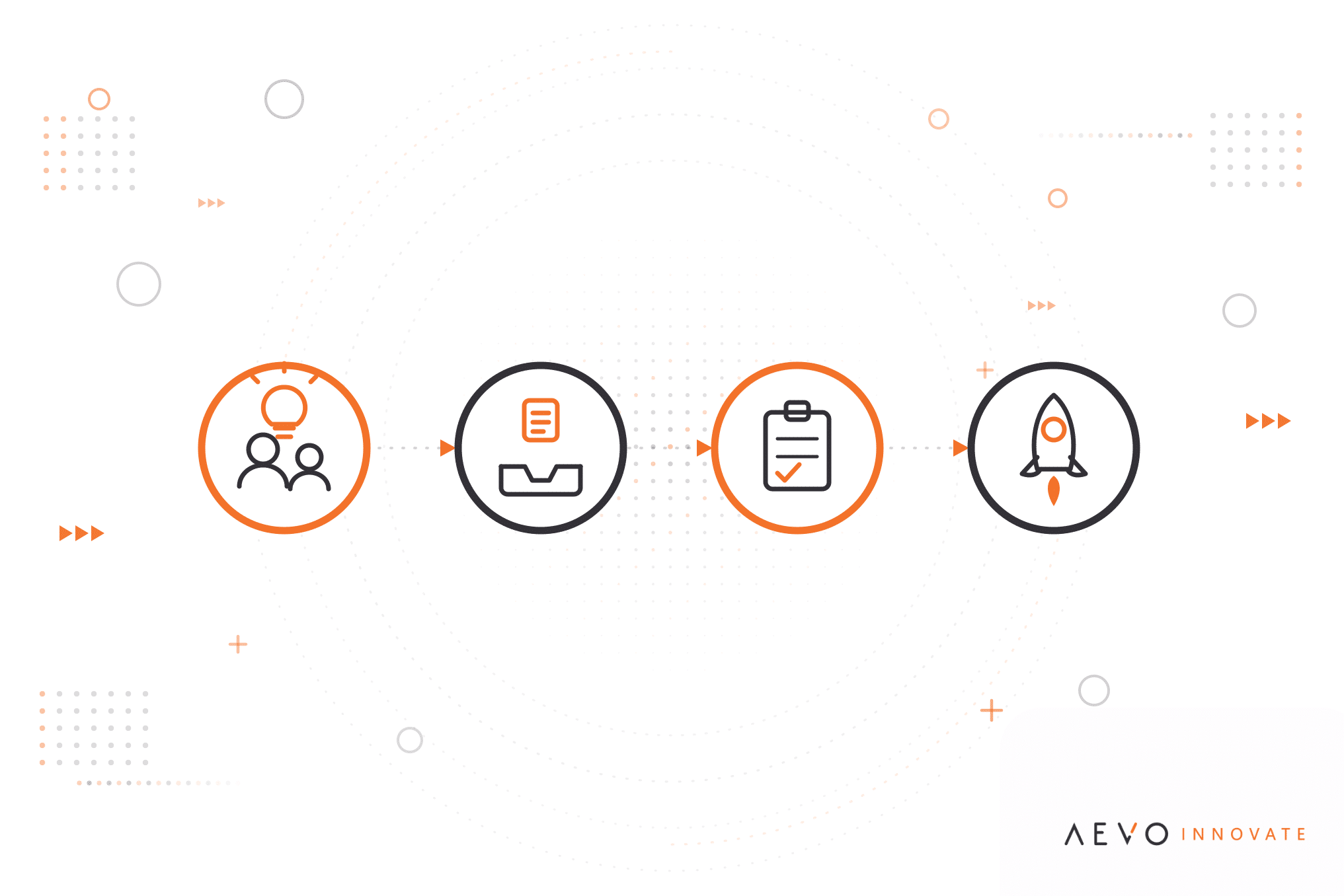
The process behind effective cross-border idea management can be summarized in four verbs:
Benchmark → Contextualize → Route → Optimize.
- Benchmark: identify global best practices and comparable solutions.
- Contextualize: adapt to each plant or jurisdiction via PESTEL.
- Route: use automated scoring to find the right execution path.
- Optimize: embed OE/CI feedback loops to refine and scale.
This continuous pipeline transforms innovation from episodic to systemic, a competitive edge for enterprises managing multi-country operations.
KPIs That Matter
The framework defines clear metrics to prove value:
| KPI | Description | Benchmark |
|---|---|---|
| % Blind Submissions Reviewed | Measures equity in intake | >80% reviewed |
| Avg Time-to-Decision | Entry → board outcome | ≤ 45 days |
| % Projects Advancing TRL Gates | From concept to pilot | +25% YoY |
| External Funding Unlocked | Grants matched to projects | +30% funding efficiency |
| SDG Impact Index | Environmental & social alignment | Continuous tracking |
When integrated into dashboards, these metrics prove that cross-border idea management is not abstract; it’s performance infrastructure.

Cultural and Operational Enablers
Democratizing innovation isn’t only about process, and sustaining cross-border idea management requires more than technology. It demands training, calibrated reviewers, and recognition systems.
Paula recommends:
- Blinded scoring exercises for reviewers
- Targeted TRL/PESTEL training
- Micro-credits for contributors
- Pre-approved legal templates for consortia work
- Clear OKRs connecting shop-floor outputs to corporate strategy
The cultural message: every employee becomes a co-creator of enterprise relevance.
Looking Ahead: AI and Cross-Border Innovation
Although Paula’s framework is method-driven, it’s highly compatible with AI-enabled platforms such as AEVO Innovate.
By combining anonymized intake with machine-learning prioritization, companies can analyze thousands of submissions and route them across regions in real time.
AI augments the governance discipline, making fairness scalable.
Join the Conversation
If you’re leading innovation across multiple regions, this is your moment to rethink governance.
Watch the full AEVO Innovate webinar.
You’ll hear directly from Paula Suliem Correa, whose work continues to shape how global organizations connect ideas, people, and measurable impact beyond borders. Explore real cases and methodologies behind cross-border idea management.
Key Takeaway
Innovation loses power when trapped inside boundaries.
By applying evidence-first intake, shop-floor validation, and disciplined routing, you don’t just collect ideas, you engineer business relevance.