Most manufacturers already understand the basics of Lean Manufacturing. The real challenge today lies in proving its financial value. Leaders and operations managers are increasingly asked to demonstrate that lean practices don’t just reduce waste; they generate tangible ROI.
In this article, we go beyond the definition and explore seven lean manufacturing practices that consistently maximize ROI, highlighting their impact on costs, productivity, and competitiveness. Along the way, we’ll reference real-world applications and outline key metrics to help you measure results in your own operation.
Here is a summary audio of this blogpost:
In this article:
- 7 Lean Manufacturing Practices to Boost ROI and Operational Excellence
- How Lean Manufacturing Practices Scale with AEVO Innovate
- How Calculate Your Lean Program ROI
- Conclusion: Lean as a Financial Strategy
7 Lean Manufacturing Practices to Boost ROI and Operational Excellence
1. Value Stream Mapping: A Lean Manufacturing Practice to Expose Hidden Costs
Among the most impactful lean manufacturing practices, Value Stream Mapping (VSM) is more than a visualization exercise – it is a strategic financial lens. By documenting every step in the production process, VSM uncovers activities that consume time and money without adding value.
- Why it matters: Research shows that up to 80% of lead time in manufacturing is non-value-added activity (waiting, unnecessary motion, over-processing). Eliminating just a portion of this can translate into millions in savings.
- Key KPIs: Lead time, cycle time per process step, percentage of non-value-added activities, cost per unit of rework.
- Example applications: Aerospace manufacturers have used VSM to reduce excess transport across large facilities; automotive suppliers have redesigned shop floor layouts to shorten operator walking distances.
ROI impact: Fewer handoffs and less waiting time directly reduce labor costs and increase throughput without extra headcount.
2. Just-in-Time (JIT): Unlocking Cash Flow and Flexibility
Just-in-Time (JIT) is one of the most recognized lean manufacturing practices, yet its ROI potential often goes under-measured. At its core, JIT minimizes inventory by aligning material flow precisely with customer demand.
- Why it matters: Inventory ties up capital and inflates storage, insurance, and depreciation costs. In industries with rapid product obsolescence (electronics, automotive components), excess stock is effectively wasted money.
- Key KPIs: Inventory turnover ratio, days of inventory on hand, carrying cost of inventory (% of total assets).
- Example applications: Toyota pioneered JIT; Dell extended it to electronics, producing only against customer orders. Both transformed supply chain agility and reduced working capital requirements by double digits.
ROI impact: By reducing stock levels, manufacturers free up cash flow, increase return on assets (ROA), and improve financial resilience in volatile markets.
3. Kaizen: Continuous Improvement with Measurable Returns
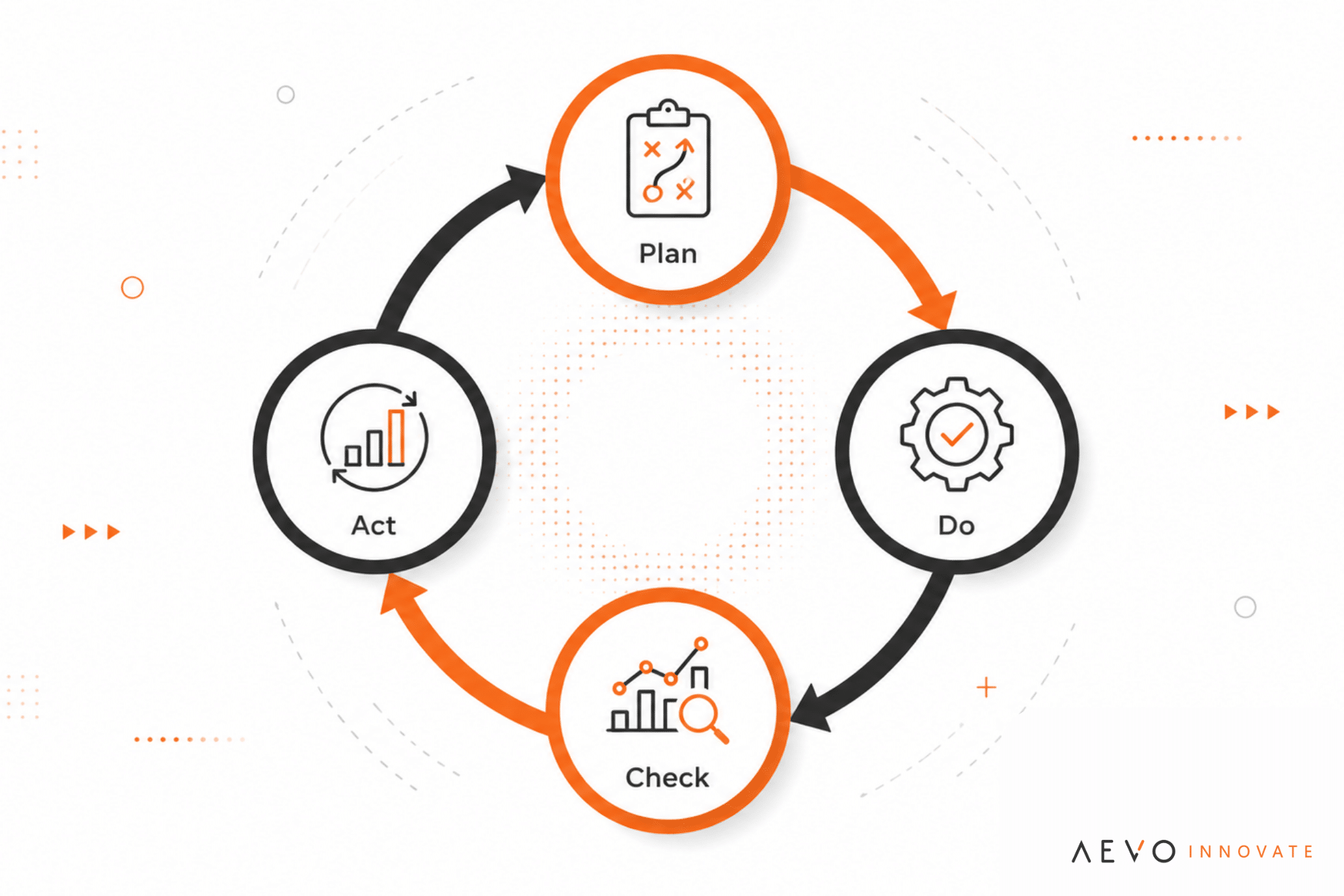
Among the most widely applied lean manufacturing practices, Kaizen is often treated as a cultural philosophy, but in ROI-driven environments it must be structured around quantifiable improvement events.
- Why it matters: Small, incremental changes compound. A single Kaizen workshop may yield modest savings, but scaled across multiple lines or plants, the impact is exponential.
- Key KPIs: Number of Kaizen events completed, cumulative savings from implemented ideas, average payback period per initiative.
- Example applications: Automotive suppliers report multimillion-dollar annual savings by applying Kaizen to workstation ergonomics, reducing motion waste and setup times. Consumer goods firms have used Kaizen to streamline packaging processes, cutting material costs.
ROI impact: Low investment, short payback cycles. Kaizen allows organizations to capture quick wins while reinforcing a culture of continuous improvement.
4. Poka-Yoke: Quality at the Source, ROI on the Bottom Line
Defect prevention is at the core of many lean manufacturing practices, and Poka-Yoke stands out by stopping errors before they multiply into costly warranty claims, rework, or reputational damage. Poka-yoke (error-proofing) prevents mistakes before they reach the customer.
- Why it matters: Studies estimate that costs of poor quality can reach 15–20% of revenue in manufacturing. Error-proofing attacks this directly.
- Key KPIs: Defect rates (ppm or %), cost of rework, scrap value, warranty claim costs.
- Example applications: Bosch applied poka-yoke mechanisms in assembly to reduce defects significantly. Electronics companies integrate poka-yoke sensors to prevent component misplacement.
ROI impact: Every prevented defect saves not only rework costs but also strengthens customer trust, which directly supports revenue and market share.
5. Total Productive Maintenance (TPM): Turning Downtime into Capacity
Among lean manufacturing practices, Total Productive Maintenance (TPM) addresses one of the costliest wastes: downtime. By engaging operators in proactive maintenance, TPM aims for zero breakdowns and zero defects.
- Why it matters: Industry benchmarks suggest that unplanned downtime costs manufacturers $260,000 per hour on average in lost productivity.
- Key KPIs: Overall Equipment Effectiveness (OEE), mean time between failures (MTBF), planned vs. unplanned maintenance ratio.
- Example applications: Food processing and automotive industries apply TPM to improve OEE by double digits, extending equipment lifespan and stabilizing output.
ROI impact: Higher uptime and reliability boost throughput without additional investment in new equipment, maximizing existing asset value.
6. Standardized Work & 5S: Discipline That Scales
While often labeled as “basic,” standardized work and 5S (Sort, Set in order, Shine, Standardize, Sustain) deliver fast and scalable ROI. They create predictability, reduce variability, and make waste visible.
- Why it matters: Standardization reduces operator-dependent variability. In high-mix manufacturing, inconsistency leads to errors, longer changeovers, and safety risks.
- Key KPIs: Setup time reduction (%), safety incident rate, productivity per operator, audit compliance scores.
- Example applications: Chemical plants, pharmaceutical facilities, and heavy industry sites use 5S to cut changeover times, reduce safety incidents, and improve audit readiness.
ROI impact: Lower operational risks, smoother audits, and faster training for new operators reduce both direct and indirect costs.
7. Digital Lean: Amplifying Lean with Industry 4.0
Lean doesn’t compete with Industry 4.0 – it leverages it. Digital tools amplify lean by providing real-time visibility, predictive analytics, and automated controls.
- Why it matters: Manual lean tracking is reactive. Digital lean enables predictive insights and faster countermeasures.
- Key KPIs: Predictive maintenance accuracy, mean time to detect deviations, digital adoption rates.
- Example applications: BMW integrates IoT sensors to maintain JIT production across global plants. Electronics manufacturers use digital dashboards to monitor KPIs in real time.
ROI impact: Digital lean accelerates the benefits of traditional practices, enabling smarter, data-driven decisions that prevent costly downtime and quality issues.
Calculate Your ROI Potential with Engaged Employees
How much value is your company missing by not engaging its people? AEVO’s free ROI Calculator helps you measure the financial impact of employee engagement in idea management programs. Instantly estimate how greater participation can accelerate innovation, increase efficiency, and unlock measurable business value.
Click the banner and run your calculation in seconds. You’ll receive a free, data-driven report showing how engagement directly boosts your ROI. See how empowering people can transform your innovation results today.

How Lean Manufacturing Practices Scale with AEVO Innovate
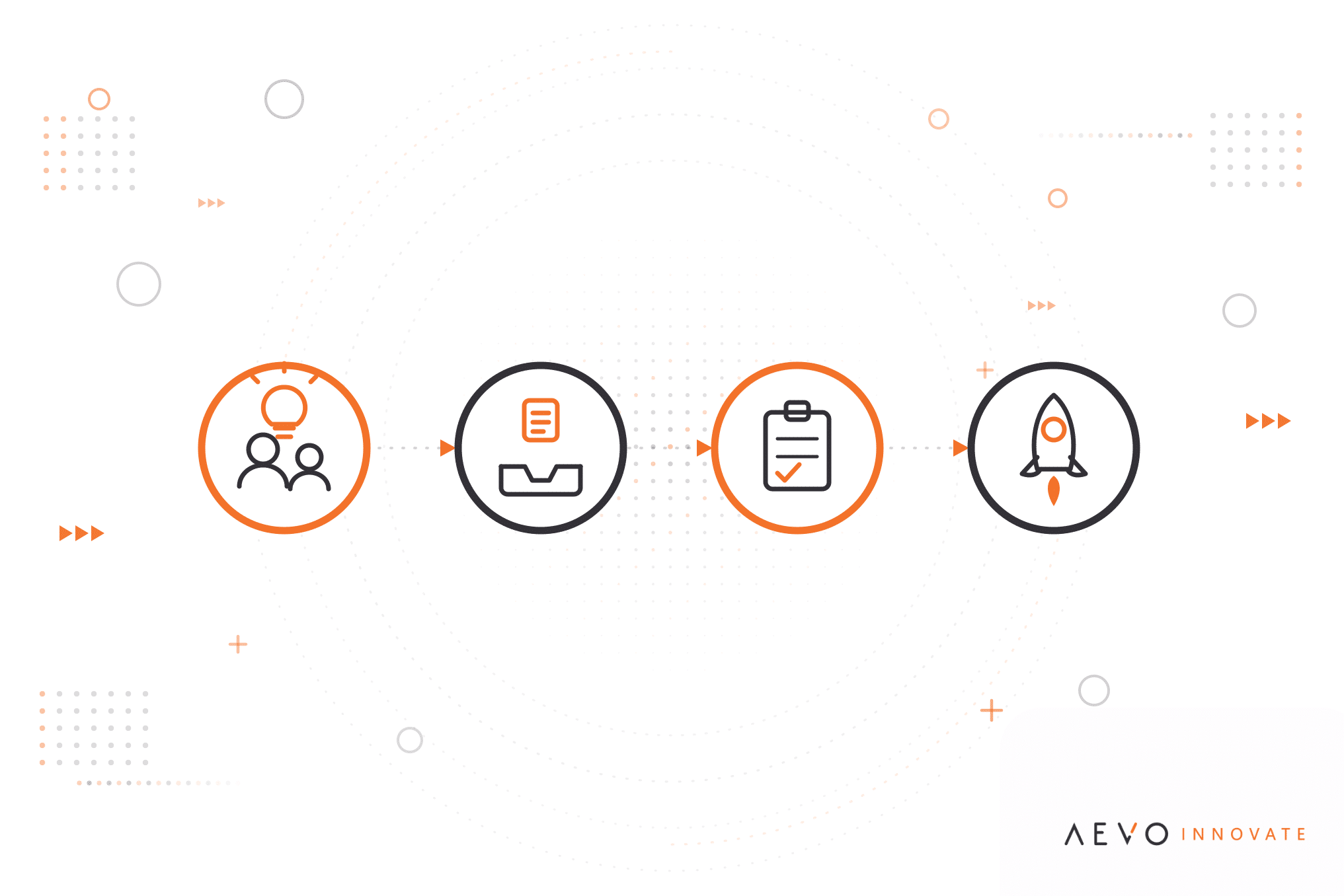
Implementing lean manufacturing practices on the shop floor isn’t just about theory or training sessions – it’s about creating a repeatable system for capturing and executing ideas. That’s where many organizations struggle: good intentions exist, but without structure, frontline knowledge is lost.
Global manufacturers like Nestlé, BIC, and Thyssenkrupp have discovered that the real ROI of lean manufacturing practices comes when employees are empowered to contribute systematically. Studies show that over 80% of optimization opportunities come from frontline employees. When their voices are heard, the impact on cycle times, cost reduction, and engagement is immediate.
This is where AEVO Innovate plays a critical role. More than a collection tool, it’s a system that helps organizations turn lean manufacturing practices such as Kaizen, 5S, and continuous improvement into structured, scalable processes.
- At Nestlé, 14 factories moved from spreadsheets to a digitized system with AEVO Innovate. In just one year, over 1,700 ideas were submitted by 5,000+ employees, with an approval rate of 90%. The result was not only process efficiency, but also higher engagement across the entire workforce.
- At BIC, more than 50,000 ideas were submitted and over 30,000 implemented using AEVO Innovate. Continuous improvement stopped being a leadership-driven mandate and became part of everyday operations on the shop floor.
As João Richa, Managing Director at AEVO Innovate, explains: “In today’s industry, ROI starts with participation. When employees feel seen, and their ideas can move through a real system, the result is not just improvement – it’s alignment and a culture of excellence.”
By connecting lean manufacturing practices with a structured innovation management platform, manufacturers achieve more than efficiency. They build long-term resilience, ensure visibility, and link continuous improvement directly to strategic objectives.
If needed, here is a quick recap video of this article.
Conclusion: Lean as a Financial Strategy
Lean manufacturing practices are not just about efficiency; they are strategic levers for profitability. When applied with discipline, practices such as VSM, JIT, Kaizen, Poka-yoke, TPM, 5S, and Digital Lean produce measurable results across cost, quality, and revenue.
For decision-makers, the message is clear: lean must be treated as an investment with ROI, not merely a cost-cutting philosophy. By quantifying results and scaling successful pilots, manufacturers can ensure lean delivers both operational excellence and financial resilience.