In today’s global industrial environment, efficiency alone no longer guarantees competitiveness. What truly defines a high-performing organization is its ability to detect, solve, and prevent problems systematically. That’s where Operational Excellence (OpEx) Methodologies become critical.
These frameworks do more than standardize best practices, they shape how teams think, align decisions with data, and embed learning into everyday operations. While tools like Root Cause Analysis or 5S are widely used, the methodologies behind them (Kaizen, DMAIC, 8D, and A3 Thinking) form the backbone of sustainable, measurable improvement.
Each of these OpEx Methodologies offers a different lens:
- Kaizen focuses on engagement and incremental change.
- DMAIC brings data discipline and analytical precision.
- 8D ensures rapid response and prevention.
- A3 Thinking connects strategy, communication, and learning.
Let’s explore how these four proven approaches are helping leading manufacturers transform continuous improvement into lasting impact.
Table of Contents
Listen to the summary of today’s reading:
1. The 12-Step Kaizen: From Action to Habit
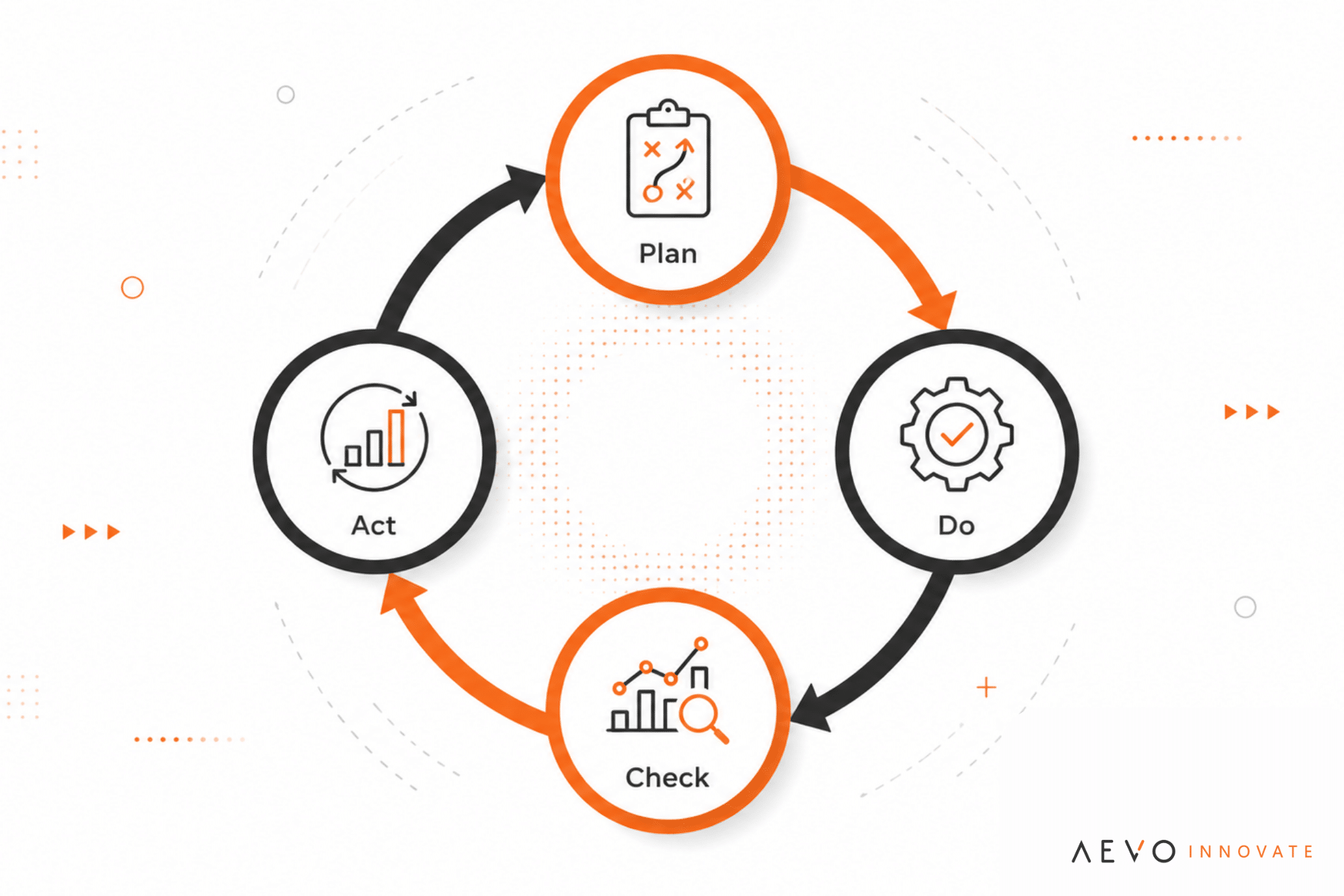
Kaizen, meaning “change for the better,” is one of the most foundational OpEx Methodologies. Originating in Japan’s manufacturing systems, it’s built on the Plan-Do-Check-Act (PDCA) logic, turning daily operations into structured learning loops.
Unlike project-based initiatives, Kaizen is continuous: a rhythm of small improvements that accumulate into exponential results. The 12-Step Kaizen by JIPM (Japan Institute of Plant Maintenance)is one of the most comprehensive frameworks available.
12-Step Kaizen Framework
| Step | Focus | Key Output |
|---|---|---|
| 1. Select Theme | Identify key performance gaps through data | Clear problem definition |
| 2. Build Team | Assemble cross-functional experts | Ownership & diversity of views |
| 3. Analyze Current Situation | Go to Gemba, collect real data | Problem visibility |
| 4. Restore Basic Conditions | Clean, calibrate, and stabilize | Standardized baseline |
| 5. Set Objectives | Aim for zero losses or deviations | Clear measurable goals |
| 6. Plan Activities | Timeline and team responsibilities | Action roadmap |
| 7. Root Cause Analysis | 5 Whys, Pareto, Fishbone | Causal understanding |
| 8. Propose Countermeasures | Design improvement ideas | Targeted solutions |
| 9. Implement Countermeasures | Execute and monitor | Controlled experimentation |
| 10. Verify Results | Compare data before/after | Validated impact |
| 11. Standardize | Institutionalize what worked | Sustained gains |
| 12. Plan Next Theme | Continuous learning | New improvement cycle |
Real-world use case:
A global packaging manufacturer used Kaizen to reduce film waste in its extrusion line. By restoring basic equipment conditions and rebalancing setup procedures, the plant cut waste by 32% and reduced downtime by 18% within three months.
Why it works:
Kaizen’s strength lies in empowerment, it gives operators a voice and leaders a framework. When applied consistently, it evolves from an event to a mindset, embedding operational excellence in the company’s DNA.
2. DMAIC: Turning Data into Decision Power
While Kaizen builds engagement, DMAIC (Define, Measure, Analyze, Improve, Control), a Six Sigma methodology, adds statistical rigor. Among all OpEx Methodologies, it’s the most structured for solving complex, data-heavy problems.
DMAIC Framework Overview
| Phase | Objective | Key Activities |
|---|---|---|
| Define | Clarify the problem and scope | Project charter, VOC, SIPOC mapping |
| Measure | Quantify performance | Data collection, baseline metrics |
| Analyze | Identify root causes | Regression, Pareto, hypothesis testing |
| Improve | Design and test solutions | Pilots, simulations, process redesign |
| Control | Sustain gains | SPC charts, SOP updates, audits |
In practice:
A Tier-1 automotive supplier applied DMAIC to its paint process, where minor humidity fluctuations were causing recurring coating defects.
- Define: Customer complaints on visual defects.
- Measure: 5% defect rate on average.
- Analyze: Correlation between humidity and defect frequency.
- Improve: Installed automated humidity controls.
- Control: Weekly SPC review and dashboard alerts.
Results:
Defect rate reduced by 62%, saving over $250,000 annually in rework and claims.
Key insight:
DMAIC is most effective where measurement systems are mature. It transforms intuition-driven decisions into evidence-based improvement, making it indispensable for global operations that require precision and compliance.
3. The 8D Method: From Quick Fixes to Systemic Learning
Developed by Ford, the Eight Disciplines (8D) method is one of the most action-oriented OpEx Methodologies. It’s particularly valuable in environments that demand fast containment of problems and cross-functional collaboration.
The 8D Method at a Glance
| Step | Focus | Outcome |
|---|---|---|
| D0 | Prepare & plan | Define prerequisites |
| D1 | Form team | Assign cross-functional roles |
| D2 | Define problem | Use 5W2H data analysis |
| D3 | Implement interim actions | Contain the issue |
| D4 | Identify root cause | Validate hypotheses |
| D5 | Develop corrective actions | Permanent solution design |
| D6 | Implement and validate | Confirm effectiveness |
| D7 | Prevent recurrence | Update standards |
| D8 | Recognize the team | Celebrate and replicate success |
Example:
A global electronics manufacturer used 8D to tackle frequent PCB assembly failures. After containment, root cause analysis revealed soldering temperature variation between shifts. By recalibrating and digitizing the temperature log, the company improved first-pass yield by 18% and reduced warranty claims by 45%.
Why it’s valuable:
8D bridges the gap between firefighting and learning. It ensures problems are documented, shared, and prevented, not just solved temporarily.
4. A3 Thinking: The Power of Simplicity and Alignment
A3 Thinking, introduced by Toyota, distills problem-solving into a single, visual document; the A3 Report. Don’t mistake simplicity for superficiality: A3 Thinking is one of the most strategic OpEx Methodologies for aligning teams and leadership.
The A3 Thinking Structure
| Section | Objective | Application |
|---|---|---|
| Problem Statement | Define the gap | Quantify issue clearly |
| Current State | Capture baseline | Gather facts and visuals |
| Target State | Set measurable goal | Define desired condition |
| Root Cause Analysis | Identify why | Use 5 Whys, Ishikawa |
| Countermeasures | Design solutions | Define what, who, when |
| Implementation Plan | Assign ownership | Timeline and R&R |
| Follow-Up | Confirm results | Monitor KPIs, standardize |
Example:
A pharmaceutical manufacturer adopted A3 reports for all cross-departmental process changes. The outcome: approval times dropped by 28%, while clarity in handoffs improved communication between R&D, Quality, and Operations.
Why it works:
A3 Thinking combines strategic alignment and visual clarity. Everyone involved (from operators to executives) can see the logic of improvement, the reasoning behind it, and the results achieved.
Integrating OpEx Methodologies: The Continuous Improvement Engine
No single methodology wins on its own. The most mature organizations combine these frameworks, choosing the right one based on problem type, data maturity, and urgency.
When to Use Each OpEx Methodology
| Methodology | Best For | Timeframe | Data Intensity | Primary Goal |
|---|---|---|---|---|
| Kaizen | Daily small improvements | Short | Low–Medium | Engagement & momentum |
| DMAIC | Complex process optimization | Medium | High | Quality & precision |
| 8D | Crisis response & prevention | Short–Medium | Medium | Containment & learning |
| A3 Thinking | Cross-functional alignment | Medium–Long | Medium | Communication & governance |
When integrated, these methods form a continuous improvement ecosystem.
Kaizen feeds daily insights, DMAIC turns them into measurable results, 8D ensures discipline under pressure, and A3 aligns the narrative and ownership.
Platforms like AEVO Innovate make this integration seamless, embedding these methodologies into digital workflows for idea management, problem tracking, and KPI visualization. This ensures every improvement connects directly to ROI.
The OpEx Methodologies Maturity Ladder
Organizations evolve in how they apply and scale Operational Excellence. This Maturity Ladder illustrates the typical evolution, from isolated initiatives to fully integrated improvement systems.
| Maturity Level | Description | Dominant Methodologies | Typical Outcome |
|---|---|---|---|
| Level 1 – Reactive Improvement | Problem-solving occurs after failures. No standardized framework. | None / Ad-hoc RCA | Inconsistent results, recurring issues |
| Level 2 – Structured Projects | Teams use methods like 8D and DMAIC for specific problems. | DMAIC / 8D | Reliable fixes, growing data discipline |
| Level 3 – Continuous Improvement Culture | Kaizen and A3 Thinking embedded in daily operations. | Kaizen / A3 | Operator-driven improvements, faster cycles |
| Level 4 – Integrated Excellence System | All OpEx Methodologies aligned digitally with business KPIs. | Hybrid (Kaizen + DMAIC + A3) | Scalable, measurable operational excellence |
| Level 5 – Predictive & AI-Enhanced CI | Data analytics and AI anticipate issues before they occur. | AI-Augmented DMAIC / Kaizen | Proactive performance management |
How to use it:
- Identify your organization’s current maturity level.
- Define target milestones (e.g., moving from structured to integrated CI).
- Embed digital platforms like AEVO Innovate to accelerate progression through automation, KPI visibility, and governance.
Measuring What Matters: The ROI of OpEx Methodologies
Operational Excellence isn’t just about process; it’s about measurable business outcomes. Companies that combine these methodologies report significant, quantifiable results:
| KPI | Average Improvement | Methodology Link |
|---|---|---|
| Overall Equipment Effectiveness (OEE) | +15–25% | Kaizen / DMAIC |
| Defect Rate | -40–60% | DMAIC / 8D |
| Idea Implementation Rate | +200% | Kaizen |
| Process Lead Time | -30% | A3 Thinking |
| Continuous Improvement ROI | 5–12× | Hybrid |
These numbers show why OpEx Methodologies remain essential to competitiveness in manufacturing, logistics, and energy sectors. When applied digitally, they deliver speed, visibility, and scalability without losing rigor.

Need a refresh? Here is a video for you:
Conclusion: The Future of OpEx is Hybrid and Human
The evolution of Operational Excellence isn’t about abandoning proven methods for automation, it’s about enhancing them. Kaizen, DMAIC, 8D, and A3 Thinking remain timeless because they solve real problems in structured, teachable ways.
However, digitalization and AI now allow teams to apply these frameworks at scale, identifying trends, quantifying ROI faster, and preserving knowledge across sites and generations.
With AEVO Innovate, organizations can operationalize OpEx Methodologies, ensuring every improvement (from the shop floor to corporate strategy) becomes measurable, shareable, and repeatable.
Because excellence isn’t achieved once. It’s practiced every day.